


Today I’m going to introduce you to the kimchi pork ribs that I usually make during the winter when my well fermented winter kimchi is abundant in the fridge!
The seasoned ribs and kimchi are cooked for a long time until the meat falls off the bone. The juicy and tender meat is infused with kimchi flavor and its own sweet spicy seasoning and the kimchi is infused with the flavor of the seasoned ribs. When I eat the kimchi, I don’t cut it into bite size pieces, instead I tear it into long strips. Then I put it over some rice on my spoon and eat it. Then I add some leftover broth to my rice bowl, mix it together and eat it. The way the ribs and kimchi season and complement each other to make this dish special.
It’s best to use baby back ribs for this recipe, which are shorter, leaner, and more tender than spare ribs. They also take less time to cook. I posted another kimchijjim recipe years ago where I used pork belly and kimchi. Both dishes are great but they have different flavors and they have their own unique taste even though they have similar ingredients. You can try both!
Enjoy the recipe!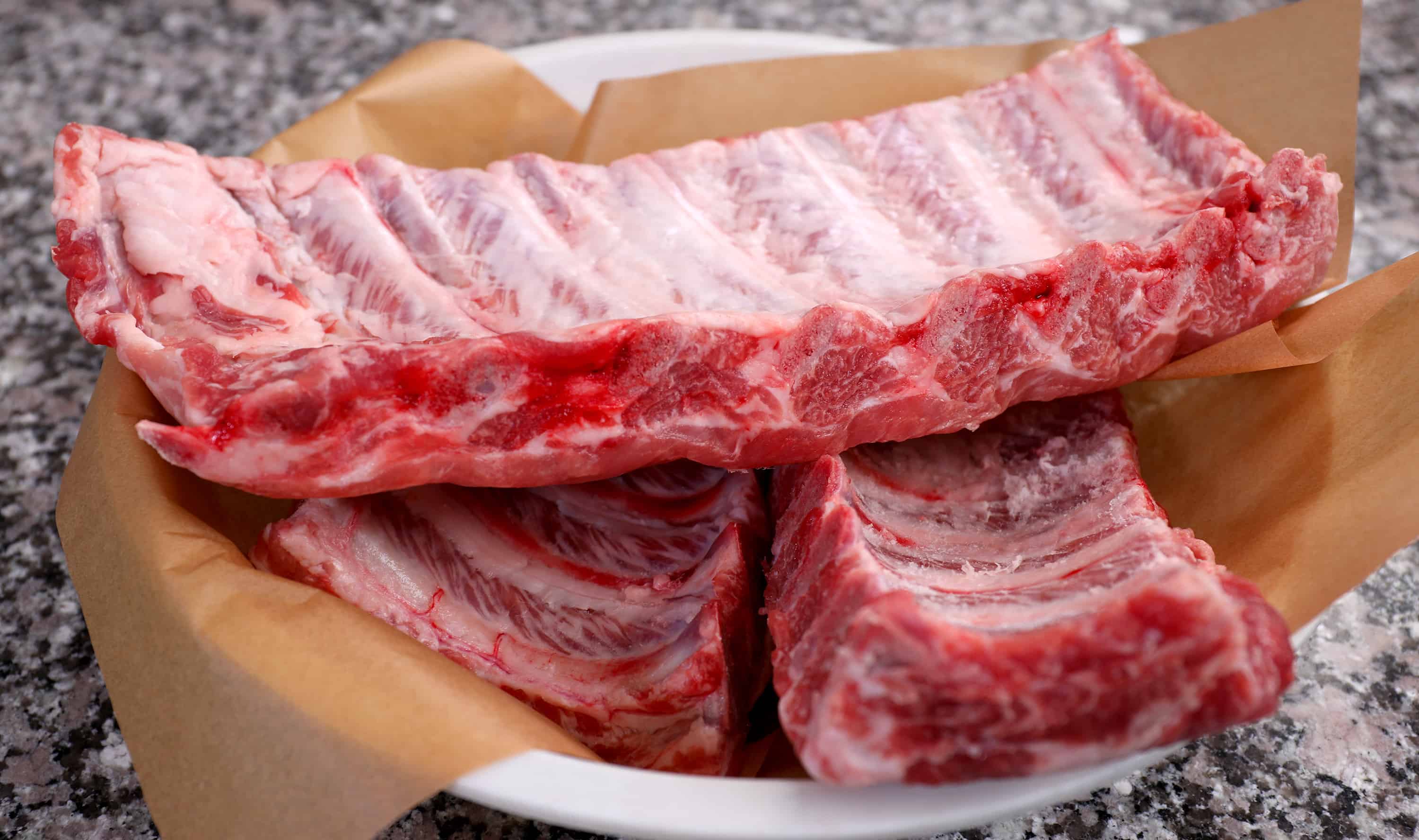
Ingredients
Serves 6 to 8
- 2 pounds baby back ribs, sliced into individual ribs
- 2 to 2½ pounds fermented kimchi
- 1 large onion (about 8 ounces), sliced
- 4 green onions, cut into 2 inch long
For seasonings:
- 2 tablespoons soy sauce
- 2 tablespoons gochu-garu (Korean hot pepper flakes)
- ¼ cup rice syrup
- ¼ cup gochujang (Korean fermented hot pepper paste)
- 1 teaspoon ground black pepper
- 8 large garlic cloves, minced
- 1 teaspoon peeled ginger, minced
- 1 tablespoon toasted sesame oil
Directions
Prepare the pork ribs
- Soak the ribs in cold water for 1 to 2 hours, changing water a couple of times. Drain.
- Bring a large pot of water to a boil and add the ribs. Cover and cook for 5 minutes until some brownish foam and smelly fat floats to the surface.
- Rinse the ribs in cold running water and drain. Put them into a large bowl and wash the large pot that the ribs were in.


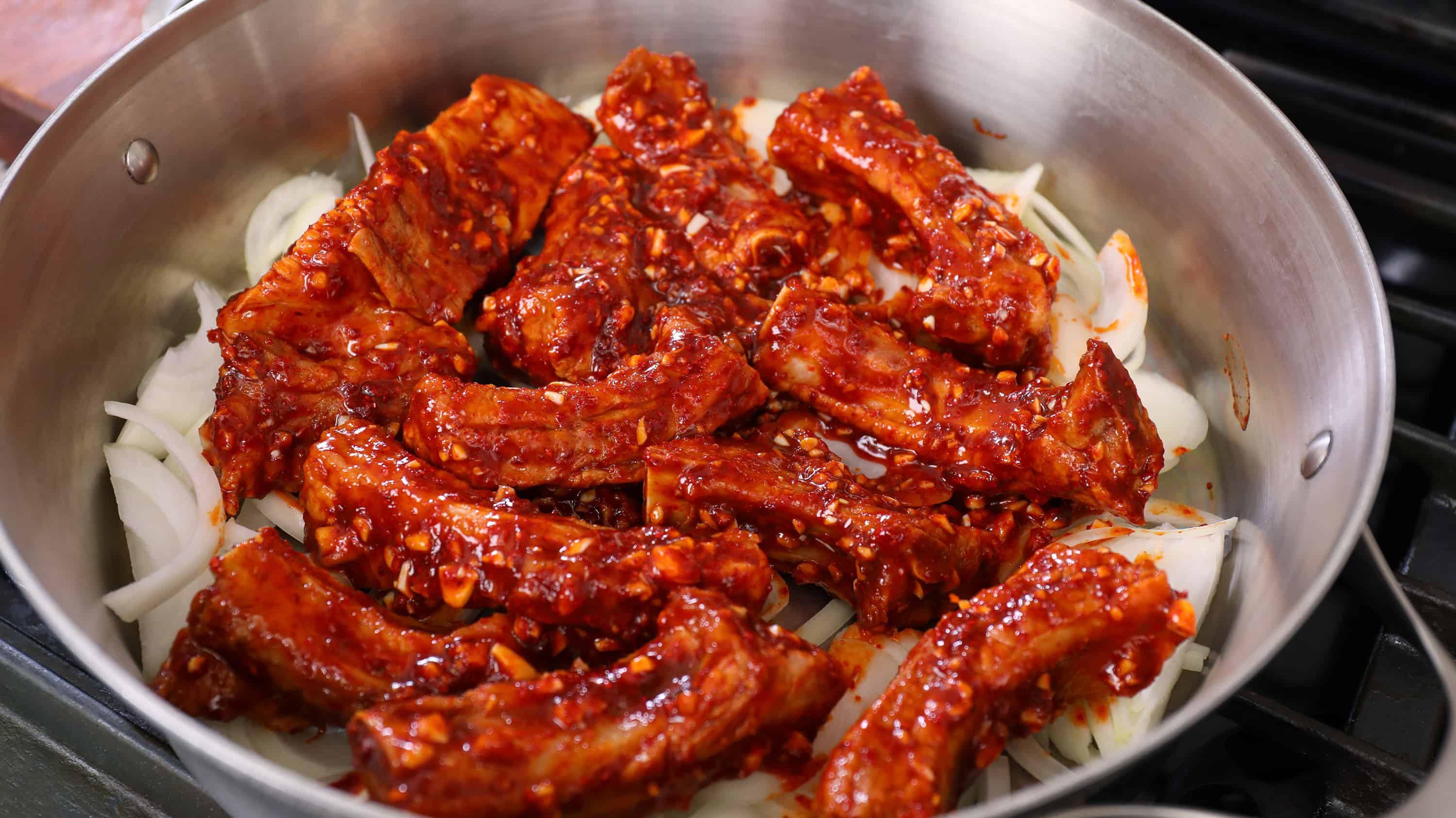
- Add all the ingredients for seasonings into the bowl with the ribs and mix it all together by hand. You can wear a rubber glove for this if you want.
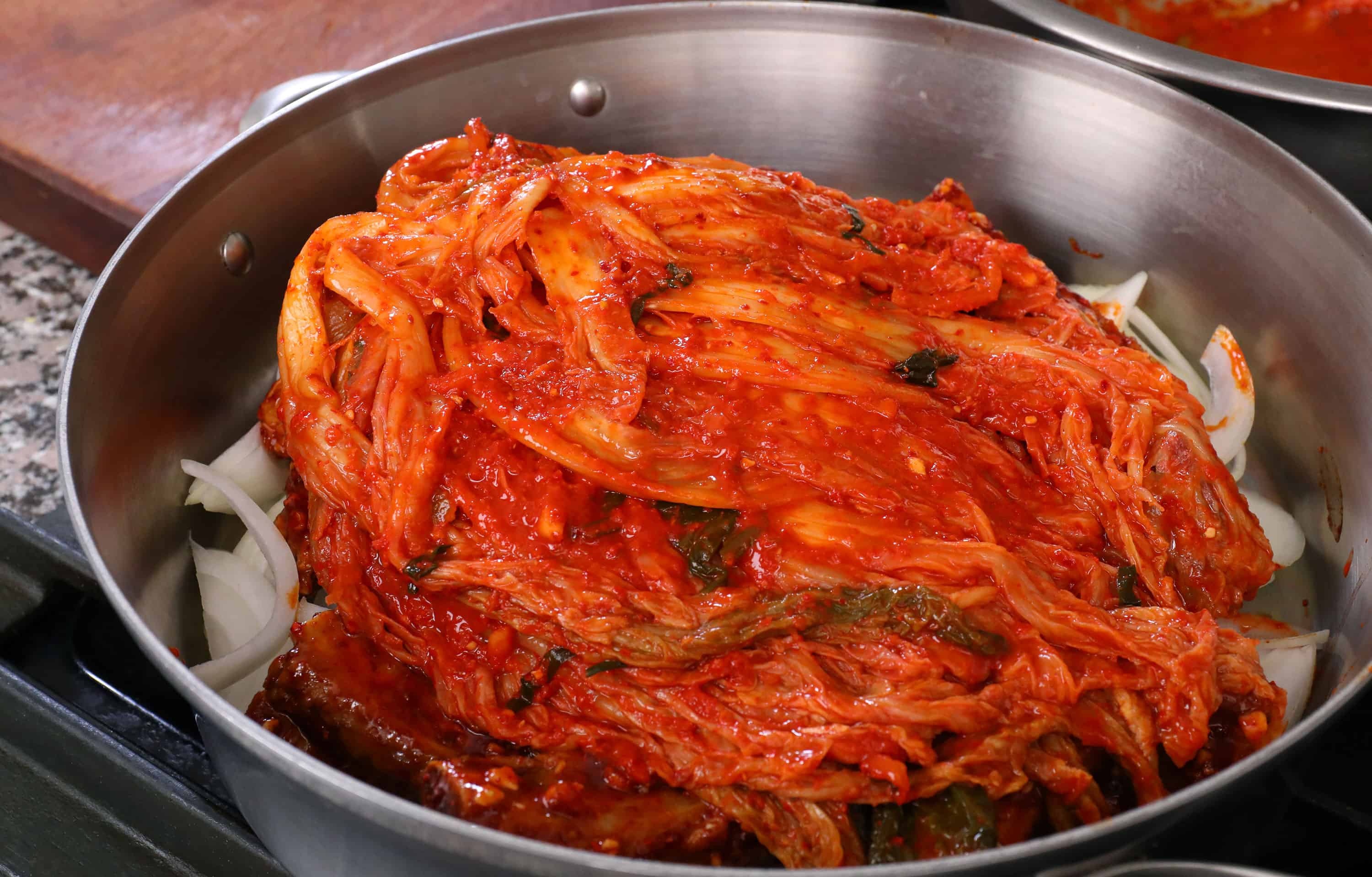
- Place the onion on the bottom of the pot and add the seasoned ribs over top. Then lay the kimchi on top of the ribs. Cut the stem of the kimchi with a kitchen knife or scissors so that the kimchi will be cooked nicely.


- Add 5 cups of cold water.

Cook
- Cover and cook for 1 hour over medium high heat until the meat is falling off the bone.
- Open the lid and turn the kimchi over. Add 2 cups more water and the green onion.
- Reduced the heat to medium and cook for another 10 minutes with the lid on.


Serve
Serve right away with rice. You can serve it in the large pot or transfer it to a large platter for a more refined presentation. Cut the kimchi stems with scissors or a kitchen knife and serve with rice. You can also serve with and a few more side dishes if you want to. You can refrigerate it up to 1 week and just reheat it before serving. 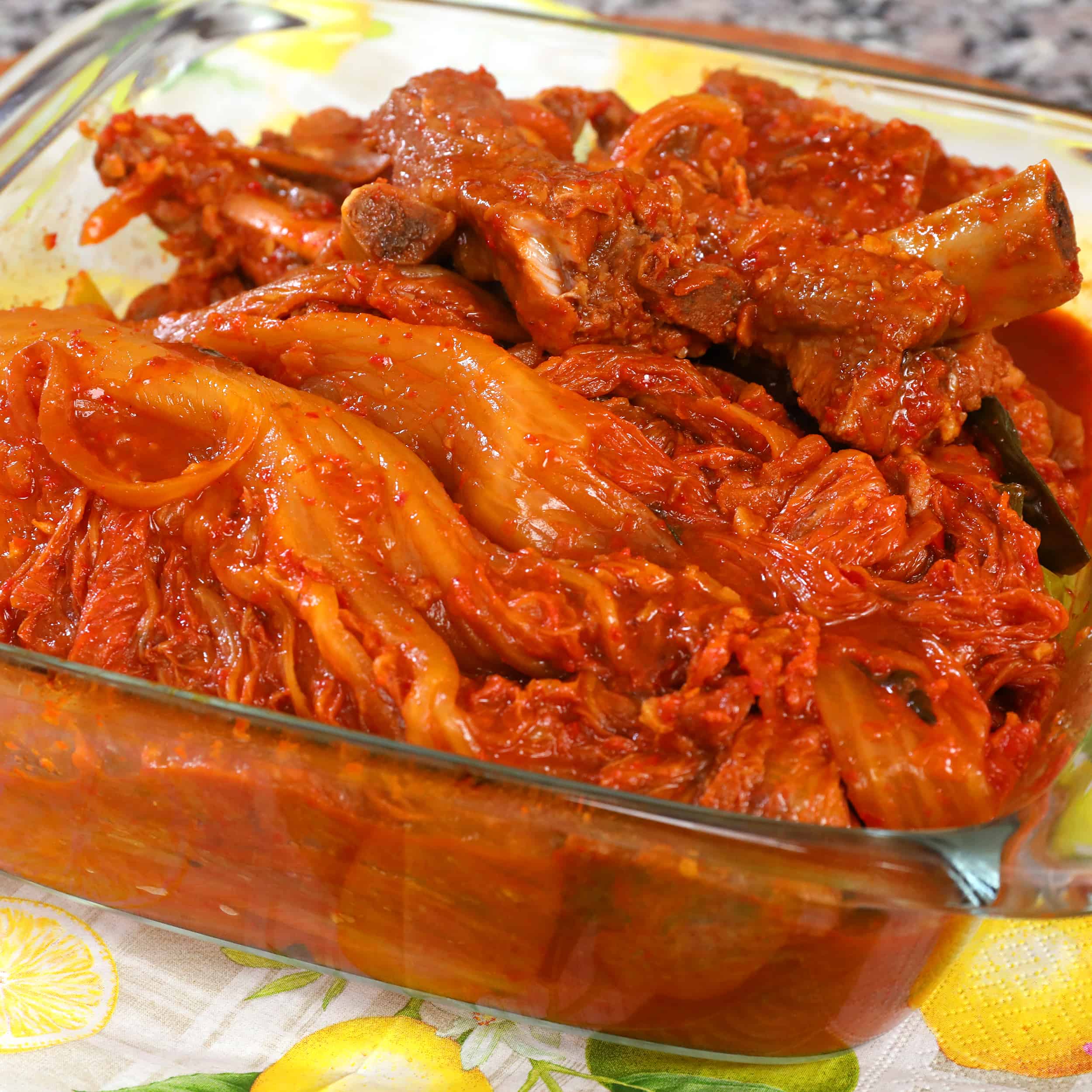
Buy this recipe's ingredients online
I really like Weee! they deliver quality packaged and fresh Korean ingredients to the continental USA. Cheaper and better than Amazon! Check them out!




Last week, really good quality pork neck ridge was on sale.
I ordered a large chunk (3 kg; got 3,4 kg – about 7,5 pounds).
Prepared it myself and left not too much meat on the neck-bones and ribs since we are only two people.
Since that was a little less than the recipe calls for, I added some torn and blanched oyster mushrooms.
Instead of anchovy stock I used pork bone broth (seollongtang-style, clean and milky; perfect!).
And – of course – really seasoned mak kimchi I wanted to use up!
Leftovers, so the next day we had maangchi.Com/recipe/kimchi-jjigae with some additional gochujang, sesame oil and onions. No tofu. Pork, of course!
Yesterday, maangchi.Com/recipe/kimchi-guk – same, but with tofu.
Today I plan to make maangchi.Com/recipe/kimchi-sujebi.
About the meat: We got a really good all-purpose slicer from a friend.
I sliced the meat 1/8 inch thin, made 8-ounce portions – my electronic kitchen scale has both kilograms/grams and pounds/ounces – and froze them.
I’m prepared now! ;-)
sanne,
We Koreans often say that if you have plenty of kimchi in the fridge, you don’t have to worry about side dishes. That’s because there are so many dishes you can make with kimchi! For me, kimchi soup was something I cooked very often in the winter for my family. Just a bowl of rice with that soup is enough and no other side dishes are needed.
Reading your message, I can really picture you, always busy in the kitchen making delicious food for your loved ones. Cheers!
Hoi (as they say here for ‘hello’),
I finally made an account after using and cooking your recipes for quite a while, I really have to thank you for adding to the foundation a dear, but passed, friend left me with. The Korean kitchen reminds me of some of the greatest – in terms of how I felt – tours I played with an percussion orchestra together with her.
Thank you!