My cookbooks
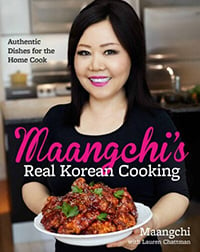
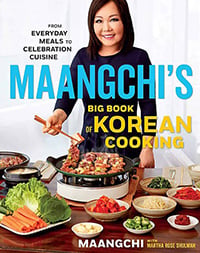
Which to get? Both are best sellers. Choose Maangchi’s Real Korean Cooking for recipes and instructions for making essential pastes and sauces, or Maangchi’s Big Book of Korean Cooking for more recipes, photos, and variety.



All cultures rely on stock to make their soups and stews delicious. Today I’m going to show you how to make a savory Korean stock that you can use as a base in many Korean dishes. It’s a typical Korean base for soups and stews like sundubu-jjigae (spicy soft tofu stew), and noodle soup (guksu) […]
Make your own rice syrup!

Hello everybody! Exciting exciting! This is the first recipe from my new cookbook! The book is still coming October 29th, but this is my first choice of recipes to show you from it. I chose it because you can use it as a substitute in any of my other recipes that call for anchovy kelp […]
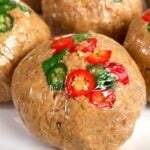
How many delicious recipes I have introduced to you that use soybeans? I showed you how to make key Korean ingredients with them like fermented soybean paste and soy sauce, and I also showed you how to make soy milk and ground soybean stew with them, too. Today I add one more thing: extra-strong fermented soybean paste, called cheonggukjang […]
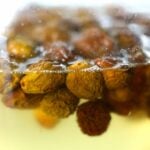
Maesil extract (Maesil-cheong) is used widely in traditional Korean cuisine as a sweetener. It’s made from maesil (aka green plums) and makes many dishes much more delicious than if you just used sugar. The result is more flavorful, fragrant, fresh, and complex. Maesil is also known to be really good for you, and Koreans believe preparing food and […]

Salty and strong, Korean soup soy sauce (guk-ganjang: 국간장 but also called joseon-ganjang: 조선간장, aka “Korean soy sauce”) is not just for soup, it’s also good for seasoning stews, meat, seafood, and vegetables. It’s very different from the commercial soy sauce you’re used to. That darker and sweeter soy sauce was invented in China and introduced to Korea through […]
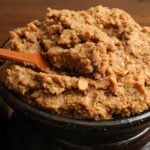
Hello everybody! I know some of you have been waiting for my doenjang and ganjang recipes for a long time! Today I feel a real sense of achievement to release this recipe here. It’s one of the recipes in my cookbook, and whether you have my book or not, this video and recipe should still be useful to you. […]

Properly toasted sesame seeds are a very important ingredient in Korean cuisine. They add a wonderful, toasted nuttiness to many Korean dishes, and are particularly important in giving vegetarian dishes an extra dimension of flavor. Other cultures use sesame seeds in their cooking but to me, properly toasted sesame seeds are part of what make Korean […]
So many of my readers tell me I’m their inspiration, but in reality they are the ones inspiring me to develop better recipes and always try my best.
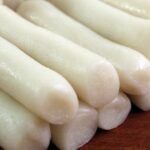
Hello everybody! Today I’ll show you how to make a homemade Korean rice cake called garaetteok. Most of you know what tteok means, right? That’s rice cake. But what about garae? What is it, and what does it have to do with this rice cake? There are a few theories about that. One of them is that garae comes from the […]

Many people who watched my rice cake videos that use frozen rice flour and who haven’t used rice flour before asked me many questions about it. Rice flour (ssalgaru) is flour made from finely milled rice. Koreans usually use one of two kinds of ssalgaru for making rice cakes: chapssalgaru (sweet rice flour) and maepssalgaru. Maepssalgaru is made with short grain […]
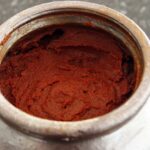
Making your own homemade gochujang is not difficult but it takes time, patience, and being in a good mood when starting if off so all goes well. You’ll also need a sunny spot for it to ferment for 2 or 3 months. Once you taste your homemade gochujang, you’ll become a Korean paste taste master and store bought will never be as good as what you can make. It improves every dish it’s used in!
Which to get? Both are best sellers. Choose Maangchi’s Real Korean Cooking for recipes and instructions for making essential pastes and sauces, or Maangchi’s Big Book of Korean Cooking for more recipes, photos, and variety.