

“Maangchi, can you show us how to make kimchi with just one head of napa cabbage?”
I’ve been hearing this request for years, ever since I posted my original mak-kimchi (easy kimchi) recipe, which uses 10 pounds of napa cabbage.
Napa cabbages come in many different sizes, so it’s important to weigh yours. Today I’m using one 3-pound head of napa cabbage, which is perfect for anyone who wants a smaller batch. If you’d like to make a larger batch, simply multiply the recipe.
What’s the difference between whole cabbage kimchi and mak-kimchi? Unlike traditional whole cabbage kimchi, mak-kimchi is made by cutting the cabbage into bite-sized pieces before salting it. This makes everything easier! The cabbage is easier to wash and mix with the kimchi seasoning paste, and when you serve it, there’s no need to cut it again. It saves a lot of time, which is why I call it “easy kimchi.”
In this recipe, I’m also going to show you a special optional ingredient that my mother often added to her kimchi: freshly shucked oysters!
Ingredients:
Makes about ½ gallon of kimchi, plus a small plateful to serve fresh.
- 1 head napa cabbage (about 3 pounds)
- 6 tablespoons kosher salt
- 2 tablespoons glutinous rice flour (sweet rice flour) or all-purpose flour
- 1 tablespoon sugar
- ⅓ cup fish sauce
- 1 tablespoon saeujeot (Korean salted fermented shrimp)
- 9 garlic cloves
- 1 teaspoon peeled ginger
- 2 cups water, divided
- 1 ounce onion (about ¼ cup), cut into chunks
- 3 ounces Asian pear (about ½ cup), peeled and cut into chunks
- 1 cup gochu-garu (Korean hot pepper flakes), or to taste
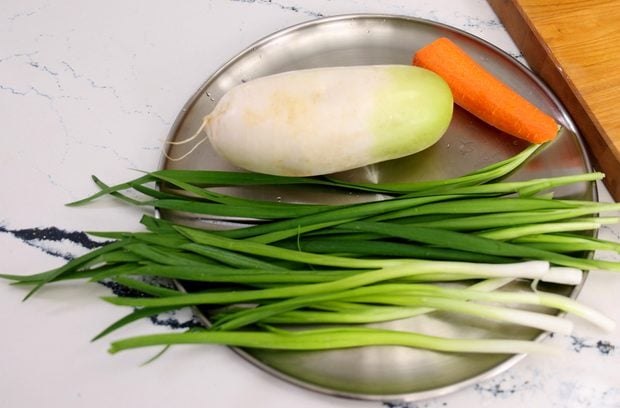
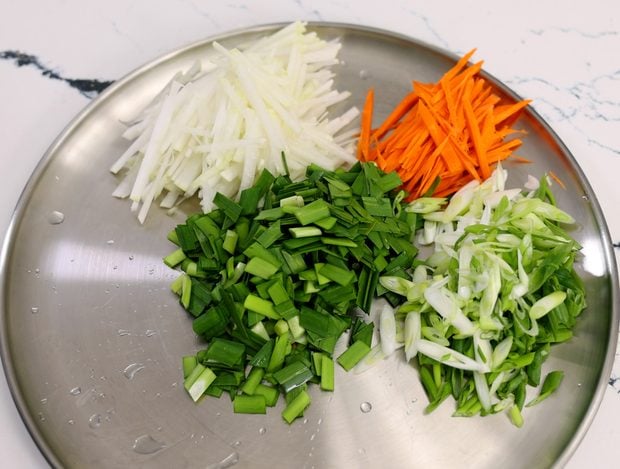
- 6 ounces Korean radish or daikon, peeled and cut into matchsticks
- 1 ounce carrot (about ¼ cup), cut into matchsticks
- 3 ounces buchu (Asian chives), cut into ½-inch pieces
- 6 green onions, sliced diagonally
- 12 freshly shucked oysters, chopped, optional
- Toasted sesame seeds, for serving fresh kimchi (optional)
Directions:
Prepare and salt the cabbage
- Cut the cabbage lengthwise into quarters and remove the core from each quarter.
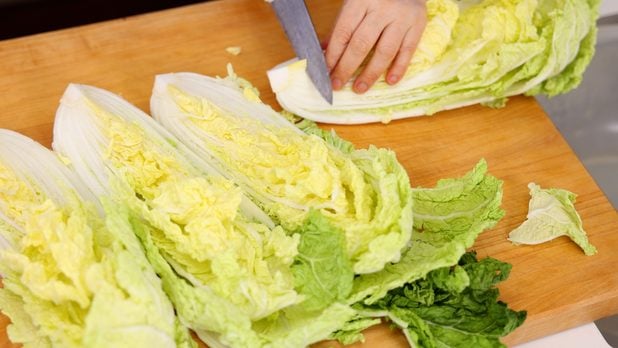
- Cut each quarter in half lengthwise, then cut crosswise into 1½-inch pieces.
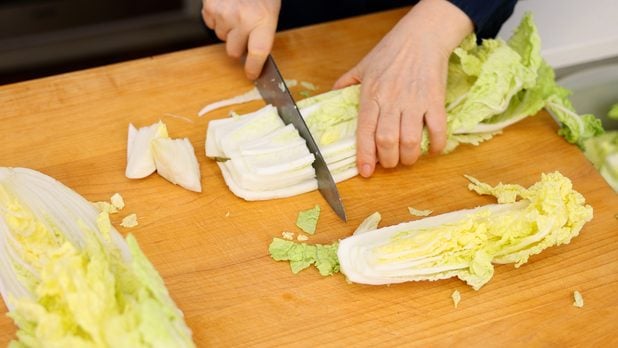
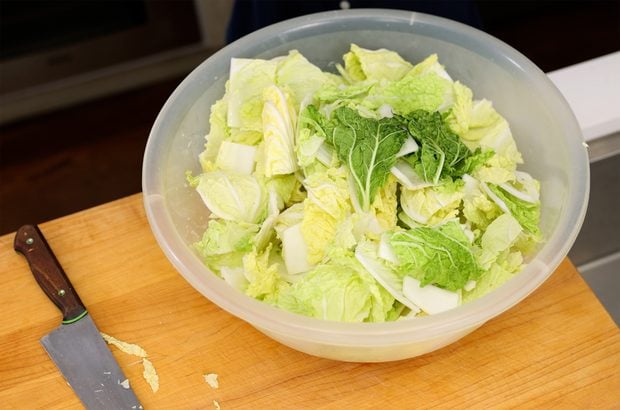
- Transfer the cabbage to a large bowl.
- Add the kosher salt and 1 cup of water and toss well. Let stand for 2 hours, tossing the cabbage every 30 minutes so it salts evenly.
Make the rice flour porridge
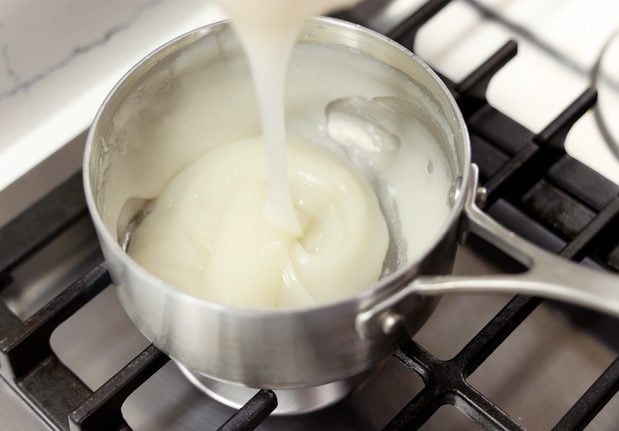
- Meanwhile, combine the flour and 1 cup water in a small saucepan and stir well.
- Cook over medium-high heat, stirring constantly, until the mixture begins to bubble, 2 to 3 minutes.
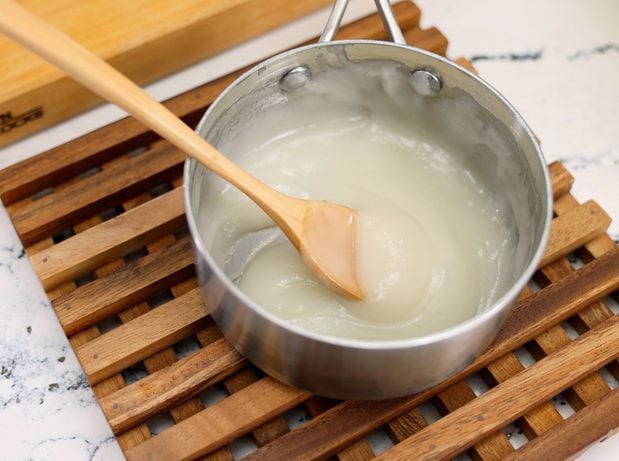
- Add the sugar and reduce the heat to medium. Continue stirring until the mixture becomes slightly translucent, about 2 to 3 minutes. Remove from the heat and let it cool completely.
Make the kimchi seasoning paste
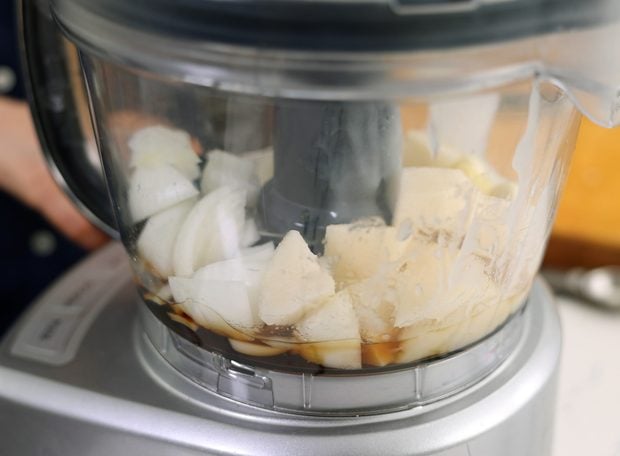
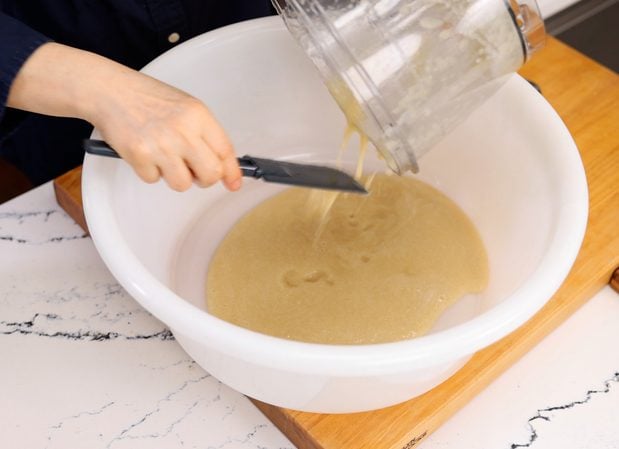
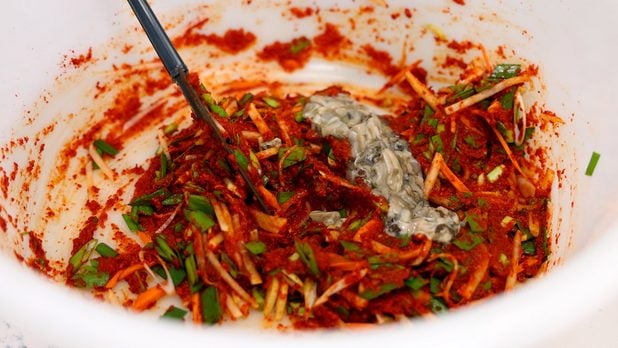
- Combine the fish sauce, cooled flour porridge, saeujeot, garlic, ginger, onion, and pear in a food processor. Process until smooth, then transfer the mixture to a large bowl.
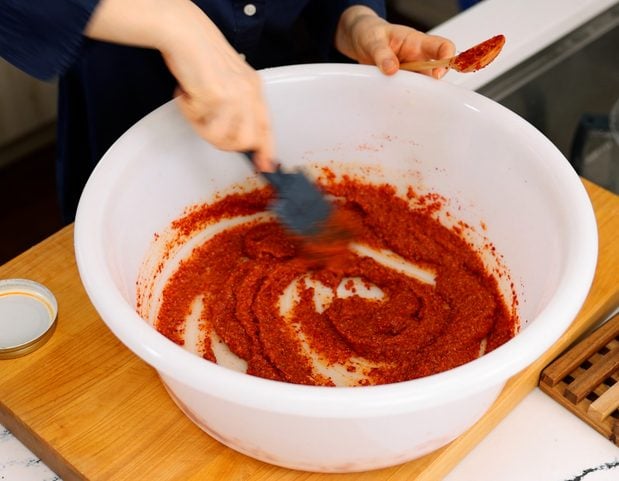
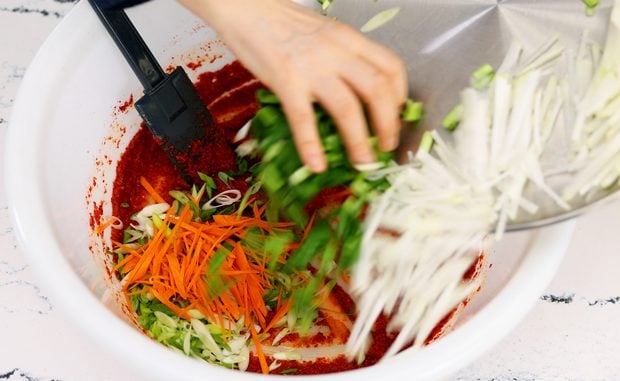
- Add the gochu-garu and stir well with a wooden spoon. Stir in the radish, carrot, chives, green onions, and oysters (if using). Mix well with a wooden spoon.
Rinse and mix the cabbage
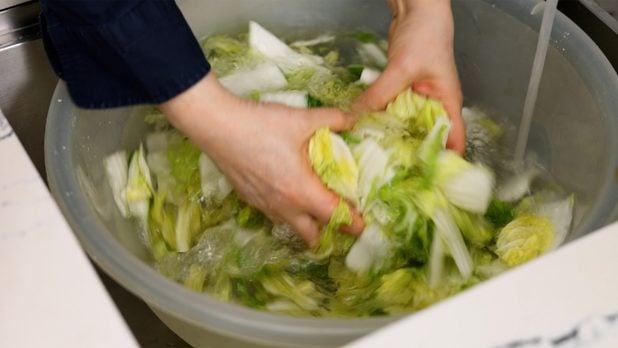
- Rinse and drain the salted cabbage 3 times under cold running water. Drain thoroughly and gently squeeze out any excess water.
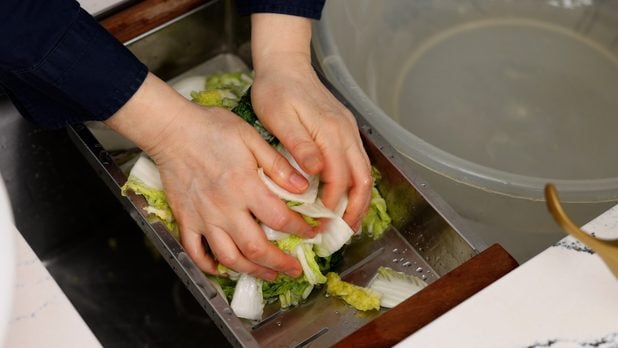
- Add the cabbage to the seasoning mixture. Wearing disposable gloves if you like, gently mix by hand until every piece is evenly coated.

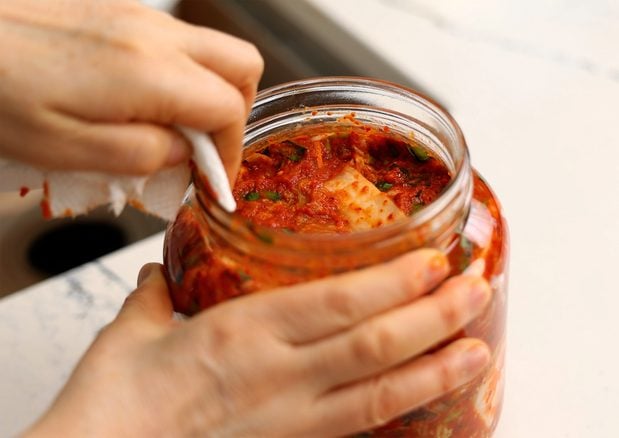
- Transfer the kimchi to one or more glass jars or airtight containers. Press it down firmly to remove air pockets and pack it tightly, then cover.

Serve or ferment
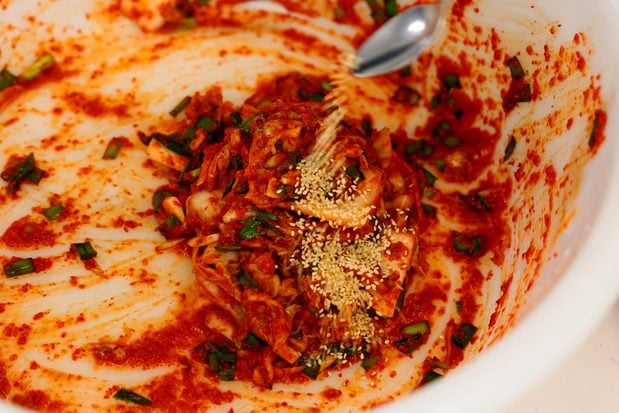
- You can serve the kimchi immediately, sprinkled with toasted sesame seeds.
- To ferment it slowly, refrigerate it for about 2 weeks. For faster fermentation, leave it at room temperature for 1 to 2 days, depending on the warmth of your kitchen, until it smells and tastes pleasantly sour. Then store it in the refrigerator.
- The kimchi will continue to ferment and become more sour over time. You can enjoy it at every stage! Whenever you take kimchi from the container, press the remaining kimchi down with a spoon so it stays covered in its juices and is exposed to as little air as possible.
Buy this recipe's ingredients online
I really like Weee! they deliver quality packaged and fresh Korean ingredients to the continental USA. Cheaper and better than Amazon! Check them out!