

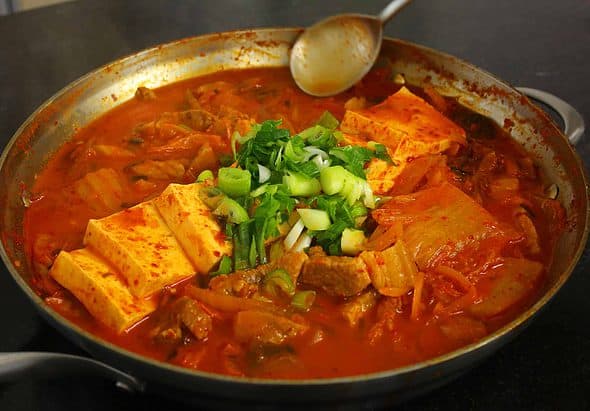
Kimchi stew is one of the most-loved stews in Korean cuisine. It’s a warm, hearty, spicy, savory, and delicious dish that pretty much everyone loves. I’ve never met anyone who didn’t like kimchi-jjigae, as long as they could handle spicy food!
Kimchi jjigae tips
For the best sour flavor, make kimchi jjigae with well-fermented kimchi. Freshly made kimchi is delicious as a side dish, but it needs time to ferment before it is ready for kimchi jjigae.
I usually store my kimchi in the refrigerator. If I want to make kimchi jjigae but all my kimchi is still fresh, I take out just the amount I need, put it in an airtight container or glass jar, and leave it on the kitchen counter. It usually turns pleasantly sour in about 2 days. The fermentation time depends on the room temperature and how salty the kimchi is. Very salty kimchi ferments more slowly.
You can make this stew with pork shoulder, pork belly, chicken, or beef. If using beef, choose a tender cut. Tougher cuts such as brisket need to simmer much longer to become tender. For a tuna version, see my tuna kimchi jjigae recipe. Anchovy stock is my favorite because it gives the stew a deep, savory flavor, but chicken or beef broth also works well.
I learned this recipe from a restaurant famous for kimchi-jjigae in Korea. People usually went there with friends and ordered enough for 2 or 4 people. The restaurant was always full of groups eating and sweating over kimchi stew. There was only one item on the menu.
What really made an impression on me was the way the meal came to the table. An uncooked pot filled with all the raw ingredients for kimchi-jjigae was set in the center, with the side dishes arranged around it. The pot was covered with a glass lid, and as soon as it arrived at the table, the server lit the tabletop burner. We would sit, talk, and sip soft drinks while watching the stew come to a boil through the glass lid. I could get a good look at the ingredients: kimchi, onion, green onion, thinly sliced pork on top, and seasonings. There were some white granules (salt, sugar, and probably MSG), and they also used water as the broth base. When the stew was ready, the warm rice was brought to the table. Each person had their own bowl of rice and a small bowl for the stew, and everyone used a ladle to serve themselves. Customers would call out: “Please give me another bowl of rice!”
From what I saw, I developed my own delicious version to make at home.
My kimchi-jjigae recipe served me well for years and years and I even made a video of it in 2007. But since then I’ve developed this version, which is even more delicious. The secret is in the savory anchovy stock.
I hope you make it and enjoy it for years and years to come!
The difference between kimchi soup and kimchi stew
Kimchi soup has more broth than kimchi stew because it is usually served in individual bowls and people often mix rice into the broth as they eat. Kimchi stew is thicker and saltier than kimchi soup.
Traditionally, kimchi stew is served in a large pot in the center of the table for several people to share. In Korea today, everyone is given an individual bowl and uses a ladle to serve themselves from the shared pot.
Ingredients
Serves 2 to 3.
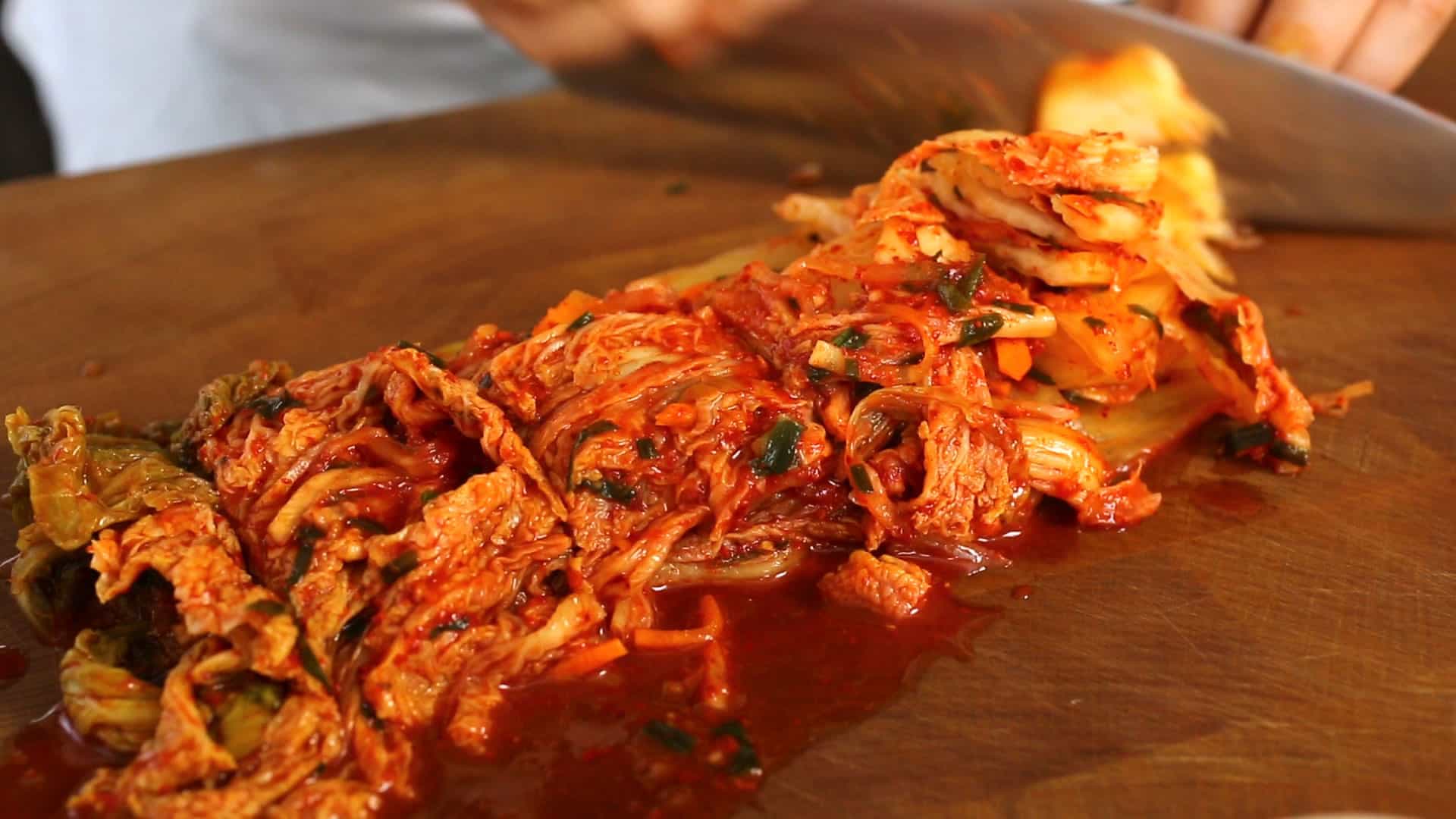
- 1 pound kimchi, cut into bite-size pieces
- ¼ cup kimchi brine
- ½ pound pork shoulder (or pork belly)
- ½ package of tofu (optional), sliced into ½-inch-thick bite-size pieces
- 3 green onions
- 1 medium onion, sliced (1 cup)
- 1 teaspoon kosher salt
- 2 teaspoons sugar
- 2 teaspoons gochugaru (Korean hot pepper flakes)
- 1 tablespoon gochujang (hot pepper paste)
- 1 teaspoon toasted sesame oil
- 2 cups of anchovy stock (or chicken or beef broth)
For stock (makes about 2½ cups):
- 7 large dried anchovies, heads and guts removed
- ⅓ cup Korean radish (or daikon radish), sliced thinly
- 4 × 5-inch dried kelp
- 3 green onion roots
- 4 cups water
Directions
Make anchovy stock:
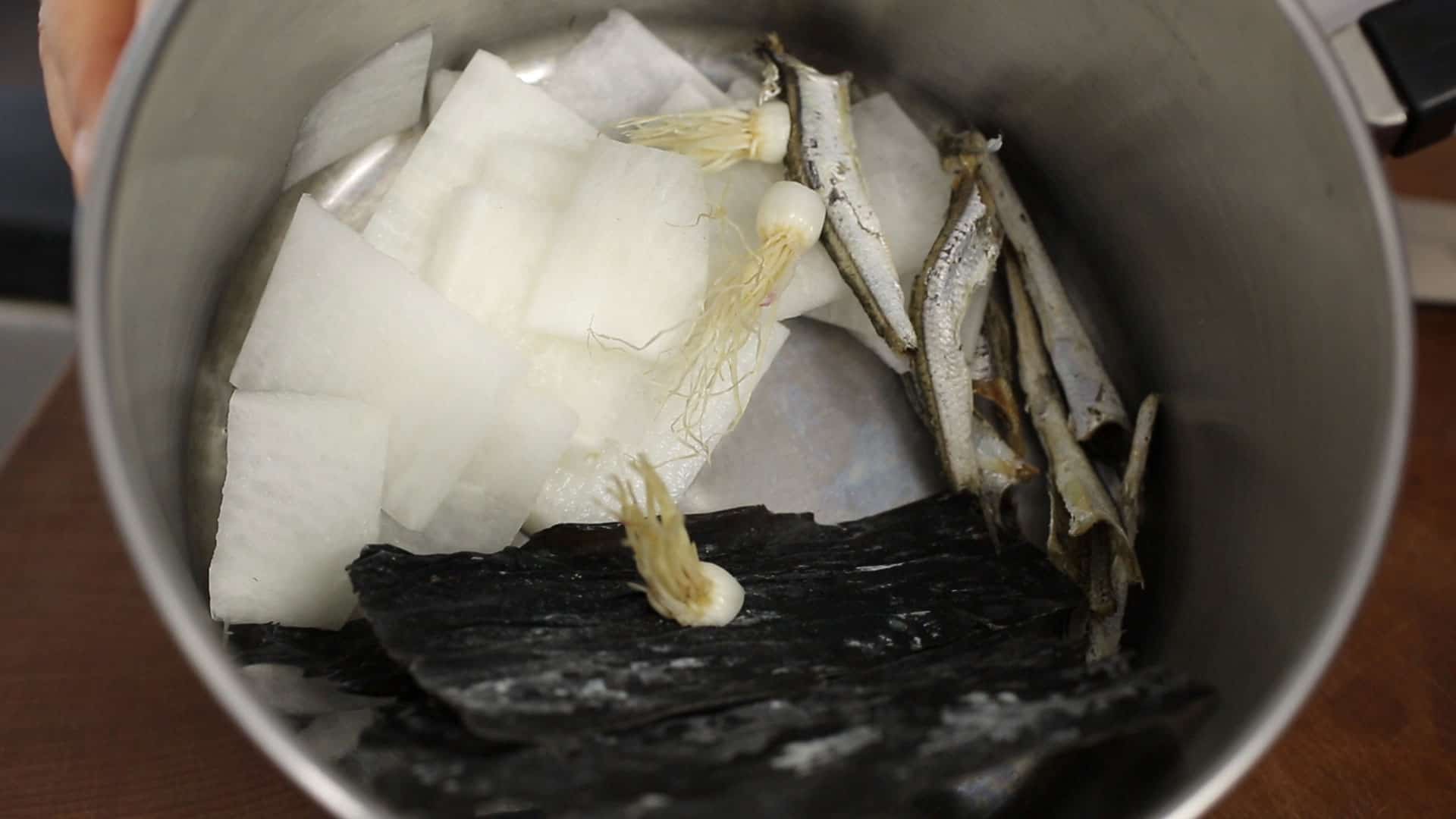
- Put the anchovies, daikon, green onion roots, and dried kelp in a saucepan.

- Add the water and boil for 20 minutes over medium-high heat.
- Reduce the heat to low and cook for another 5 minutes.
- Strain.



Make kimchi stew:
- Place the kimchi and kimchi brine in a shallow pot. Add pork and onion.

- Slice 2 green onions diagonally and add them to the pot.
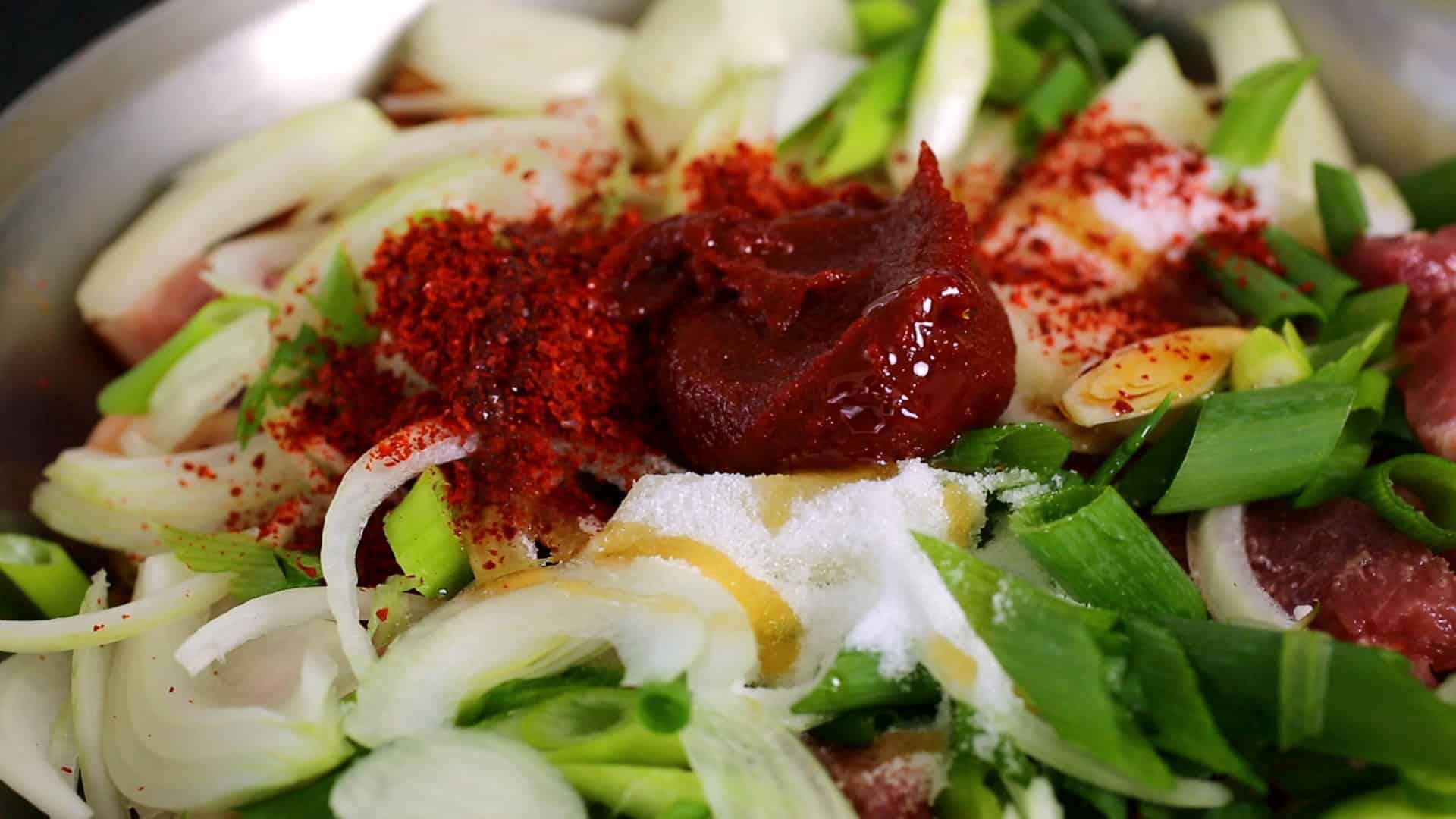
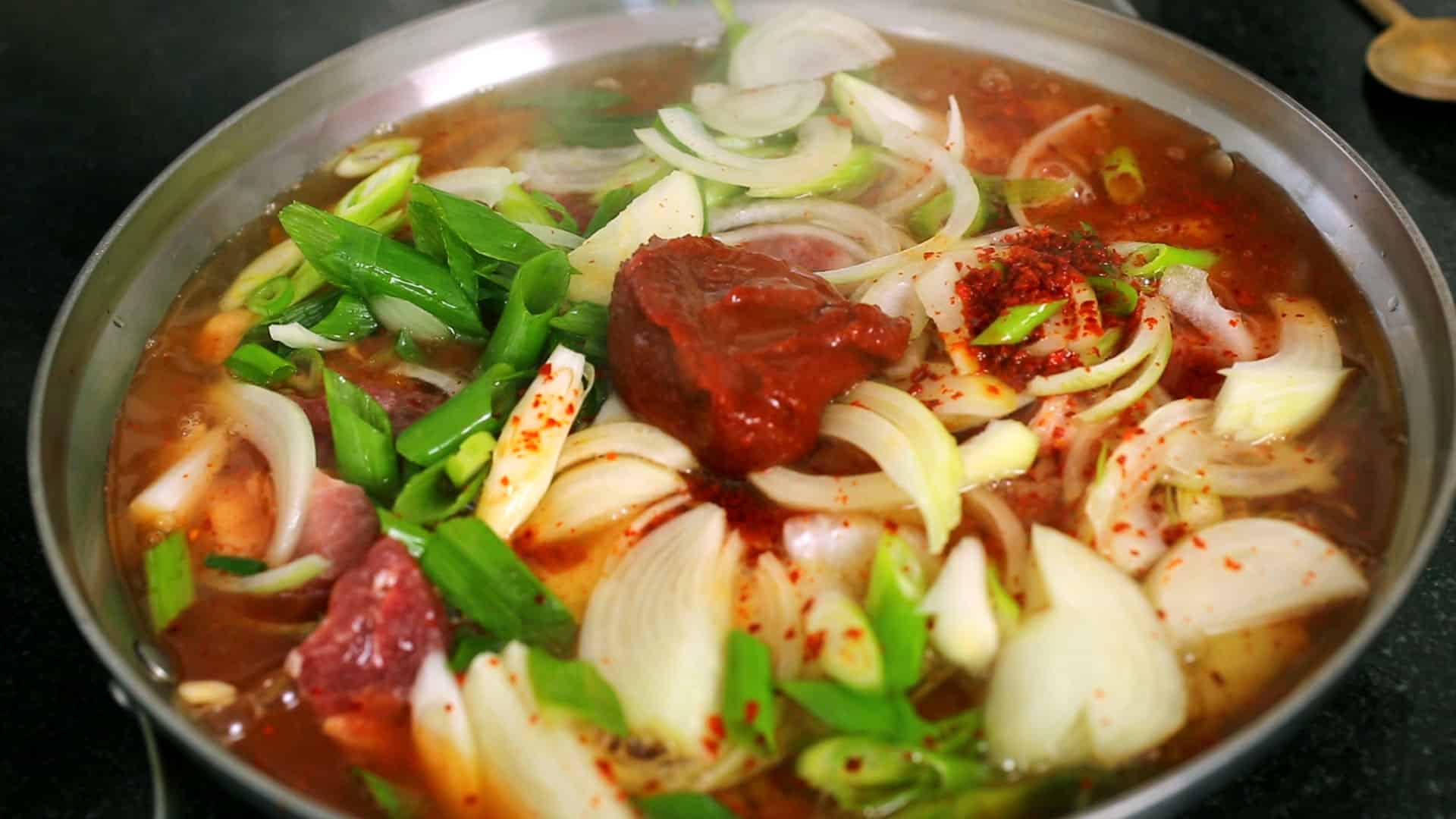
- Add salt, sugar, hot pepper flakes, and hot pepper paste. Drizzle sesame oil over top and add the anchovy stock.

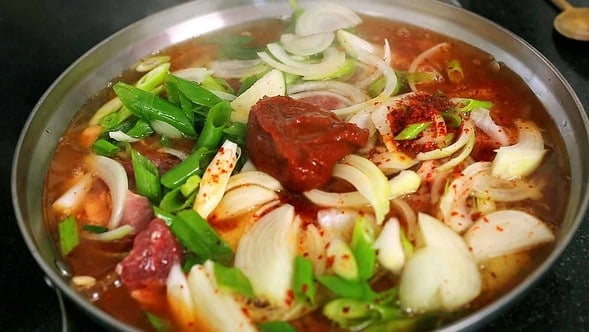
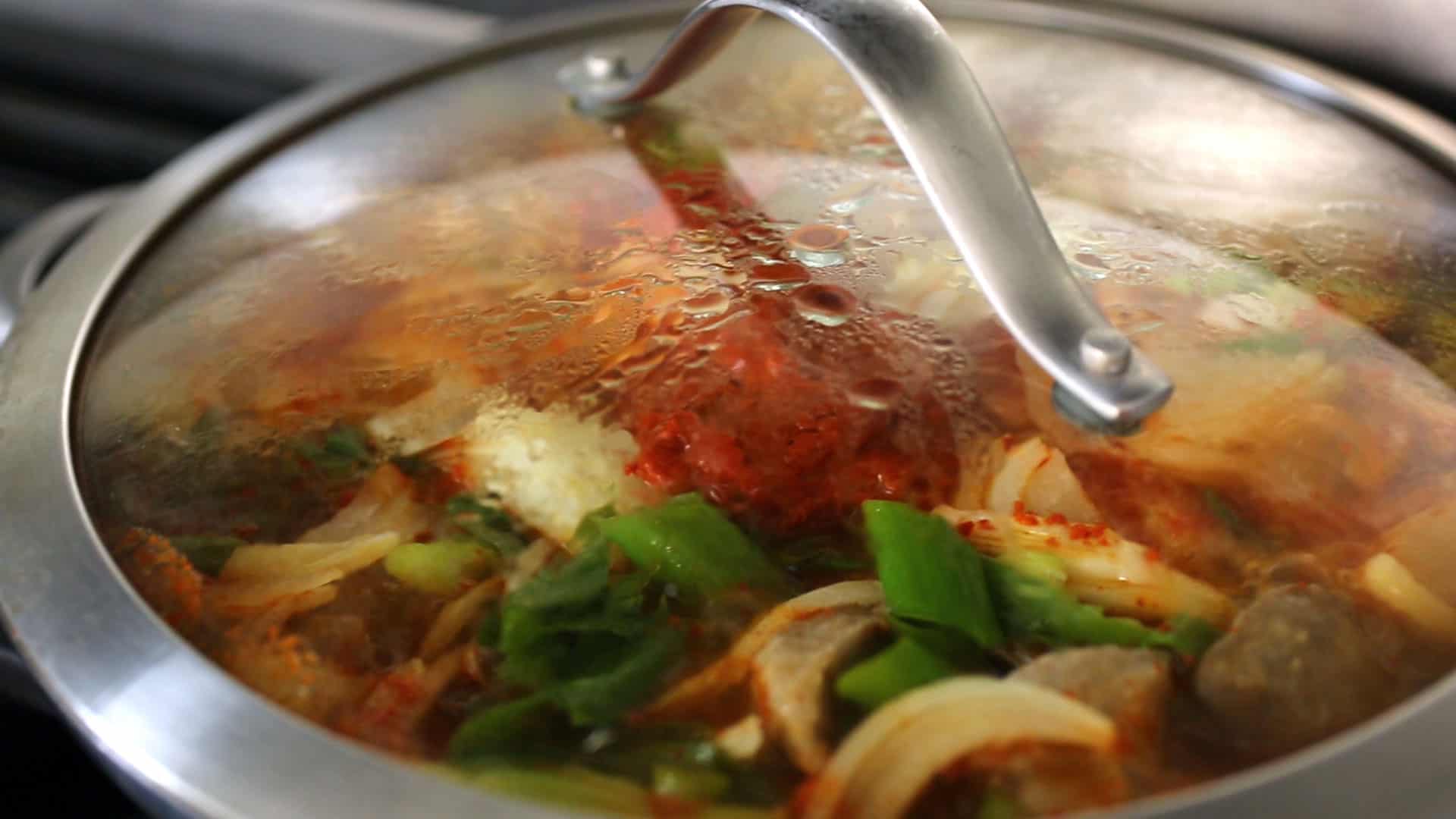
- Cover and cook for 10 minutes over medium-high heat.

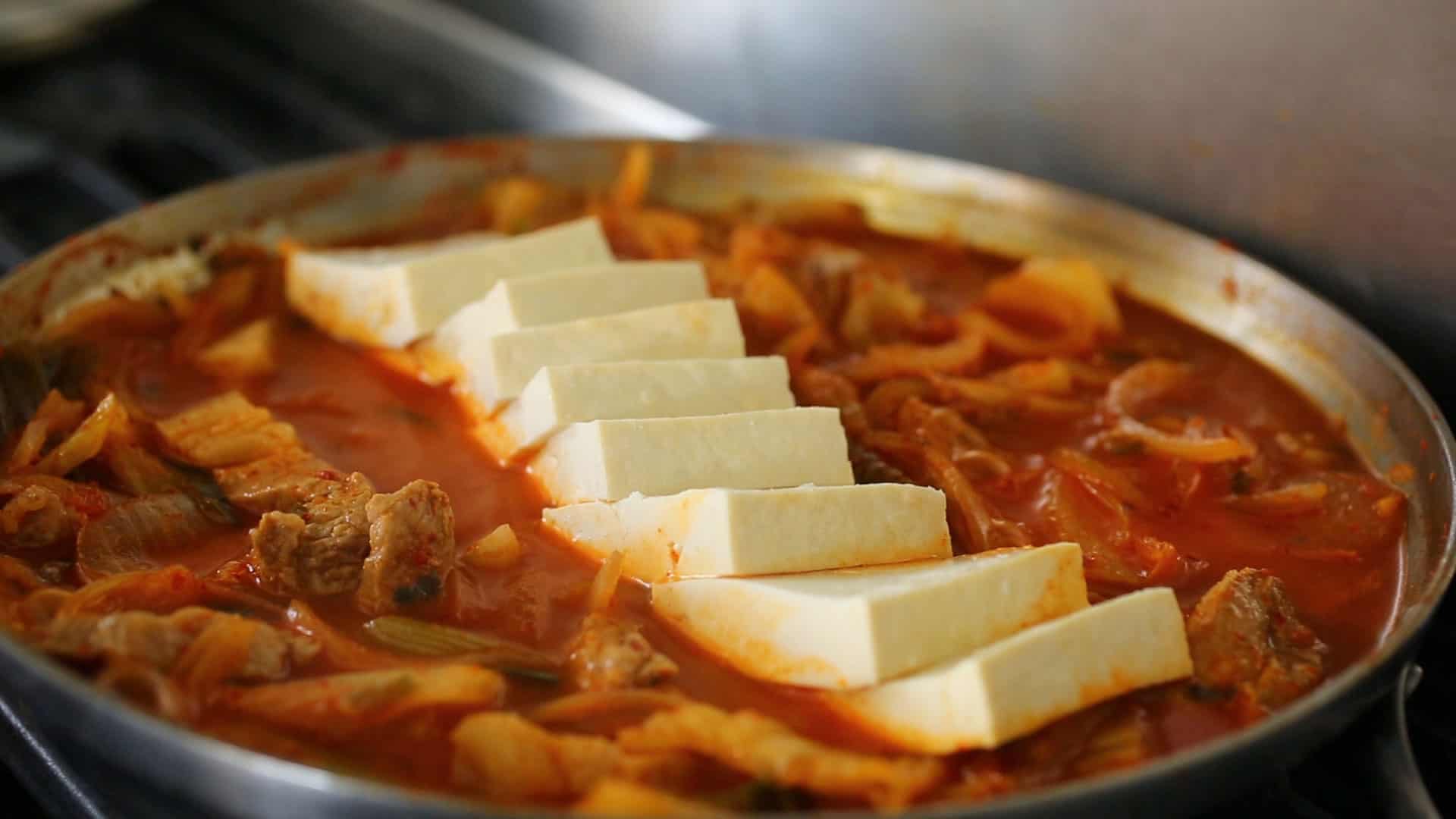
- Uncover and mix the seasonings in with a spoon. Lay the tofu over top.


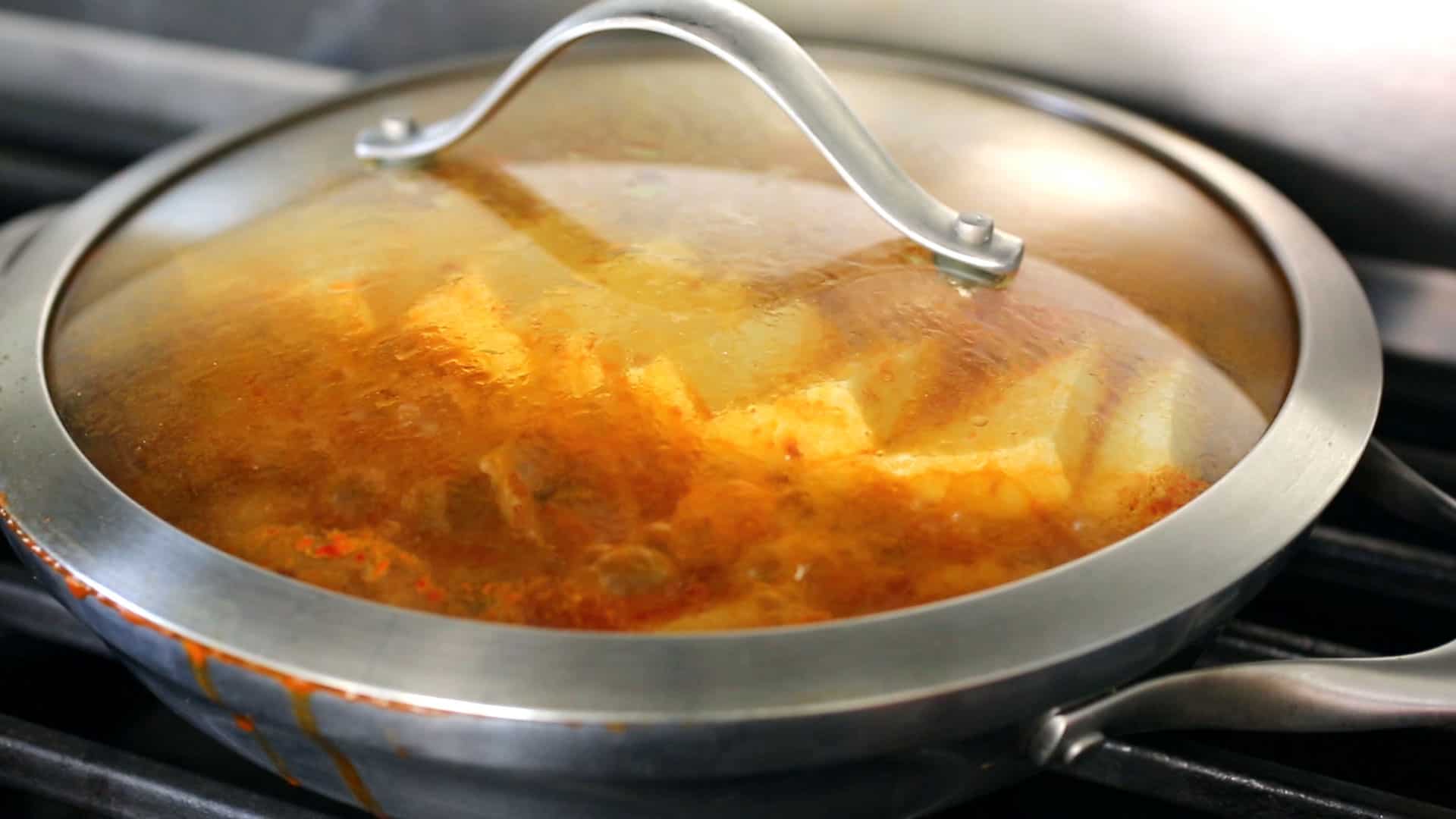
- Cover and cook for another 10 to 15 minutes over medium heat.
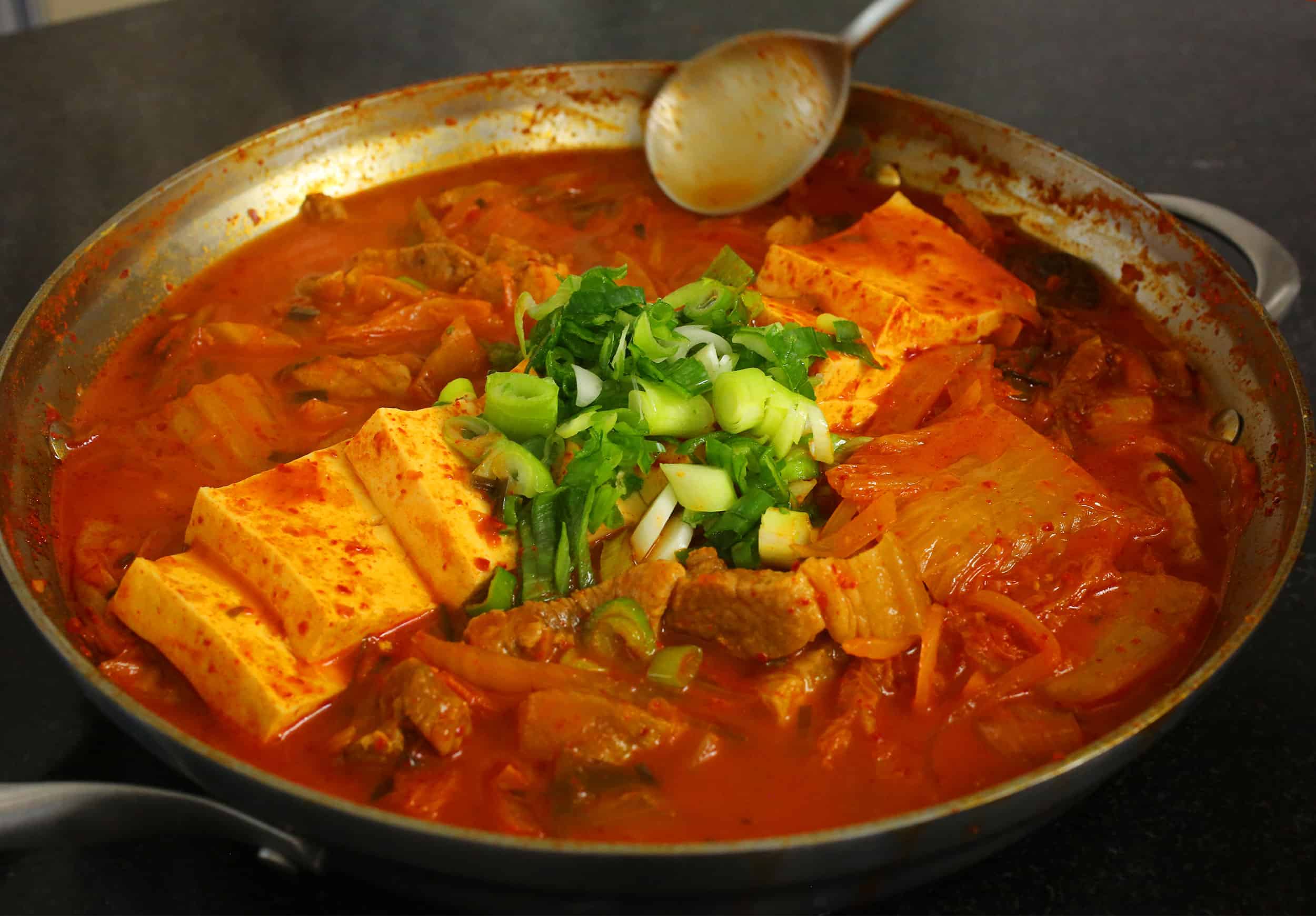
- Chop 1 green onion and put it on top of the stew. Remove from the heat and serve right away with rice.

Buy this recipe's ingredients online
I really like Weee! they deliver quality packaged and fresh Korean ingredients to the continental USA. Cheaper and better than Amazon! Check them out!