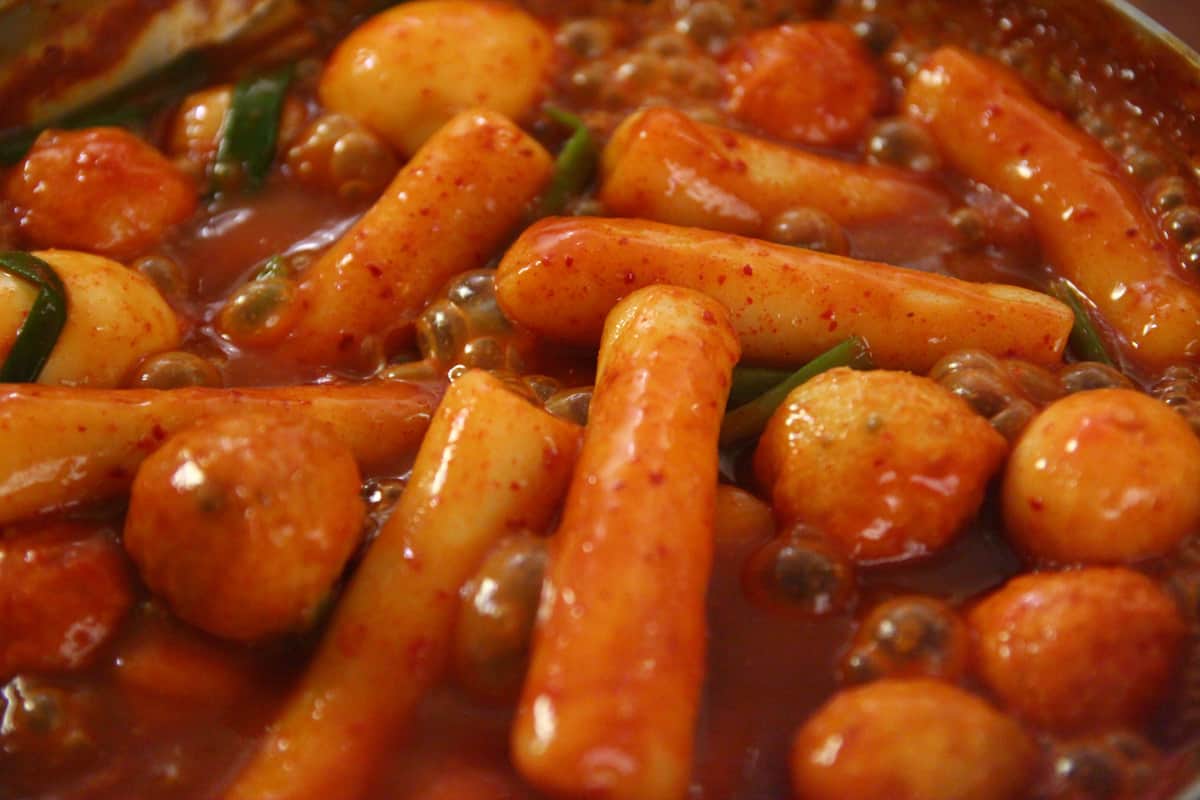
Tteokbokki is chewy rice cakes cooked in a red, spicy broth. It’s a popular Korean street food. When I was a student coming home from school it was hard to resist the spicy rice cakes sold by vendors on the street! They would have big vats of tteokbokki and just kept stirring and stirring it, making it more and more delicious over time. We would stop by and they would give us a small paper cup of spicy rice cakes dripping with the spicy, slightly sweet sauce for a very reasonable price that any student could afford. We just couldn’t resist it! The sauce is fiery hot and a little sweet, and the rice cakes have a mild flavor and are soft and chewy.
For a lot of my readers who’ve never had it before, it looks like pasta in tomato sauce, but it doesn’t taste like that at all.
When I lived in Korea I learned the secret to making good tteokbokki from a famous place in the local market. It was run by an old lady who could always be found stirring her pot of tteokbokki, and there were always people lined up to buy it.
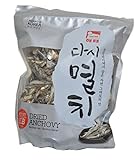
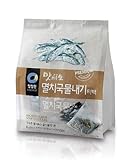
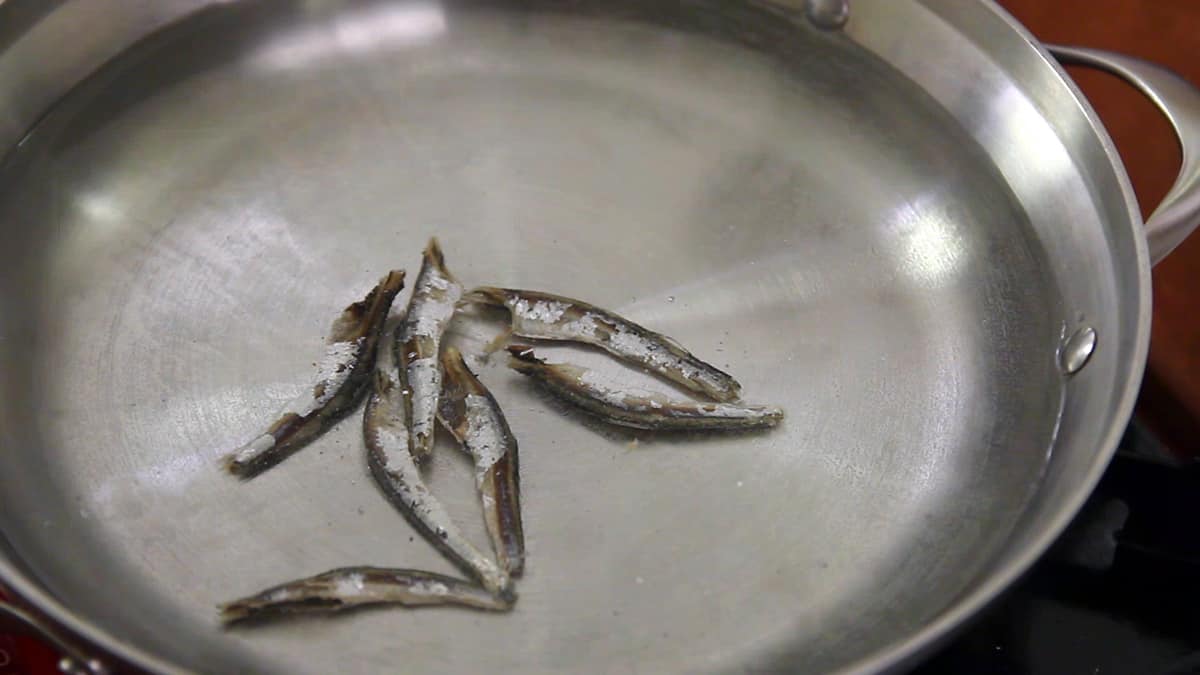
She prepared it right in front of us, so I saw she first made an anchovy stock from dried anchovies. I made tteokbokki at home and found it made a huge difference in flavor. I once ran out of dried anchovies and made tteokbokki without it, and it didn’t taste at all like what I was expecting. So don’t forget to always make a good stock with dried anchovies when you make this! It totally makes this dish!
There are many variations of the Romanized English spellings of tteokbokki (떡볶이): ddeokbokki, dukbokki, tteok-bokki and on and on. Years ago the Korean government tried to standardize the name as “topokki” and even asked me to change it everywhere on my website! It just sounded weird to me so I never did it. How do you pronounce it? The first two t’s are a hard t, and the eo sounds more like a u.
There are also many variations of the tteokbokki recipe: some people add dumplings (mandu), some add cabbage, cheese (mozzarella cheese seems popular), or ramen noodles. Creamy, saucy rosé tteokbokki was popular for a while, and a few hundred years ago the Korean royal court enjoyed nonspicy, soy sauce based gungjung tteokbokki. This version below of the spicy Korean rice cakes is an authentic classic and my favorite. Everyone loves it, so let’s make tteokbokki!
Ingredients
Serves 3–4
- 1 pound (about 450 g) of cylinder shaped rice cake (tteok), fresh or frozen, bought or homemade. (Use a little more if you’re not adding hard boiled eggs and fish cakes)
- 4 cups of water
- 7 large size dried anchovies, with heads and intestines removed
- One 6 × 8-inch (15 × 20 cm) piece of dried kelp
- ⅓ cup hot pepper paste (gochujang)
- 1 tablespoon Korean hot pepper flakes (gochugaru) aka “Korean chili flakes”
- 1 tablespoon sugar
- 3 green onions (scallions), cut into 3 inch long pieces
- 2 hard boiled eggs, shelled (optional)
- ½ pound (about 225 g) fish cakes, cut into bite-sized pieces (optional)
Before you start: If using frozen rice cakes, thaw them and soak them in cold water to soften them before cooking. Freshly made rice cakes will soften faster.
Directions
Cooking time: 25–30 minutes (15 minutes for the anchovy broth and 10–15 minutes for the tteokbokki)
- Add the water, dried anchovies, and dried kelp to a shallow pot or pan.
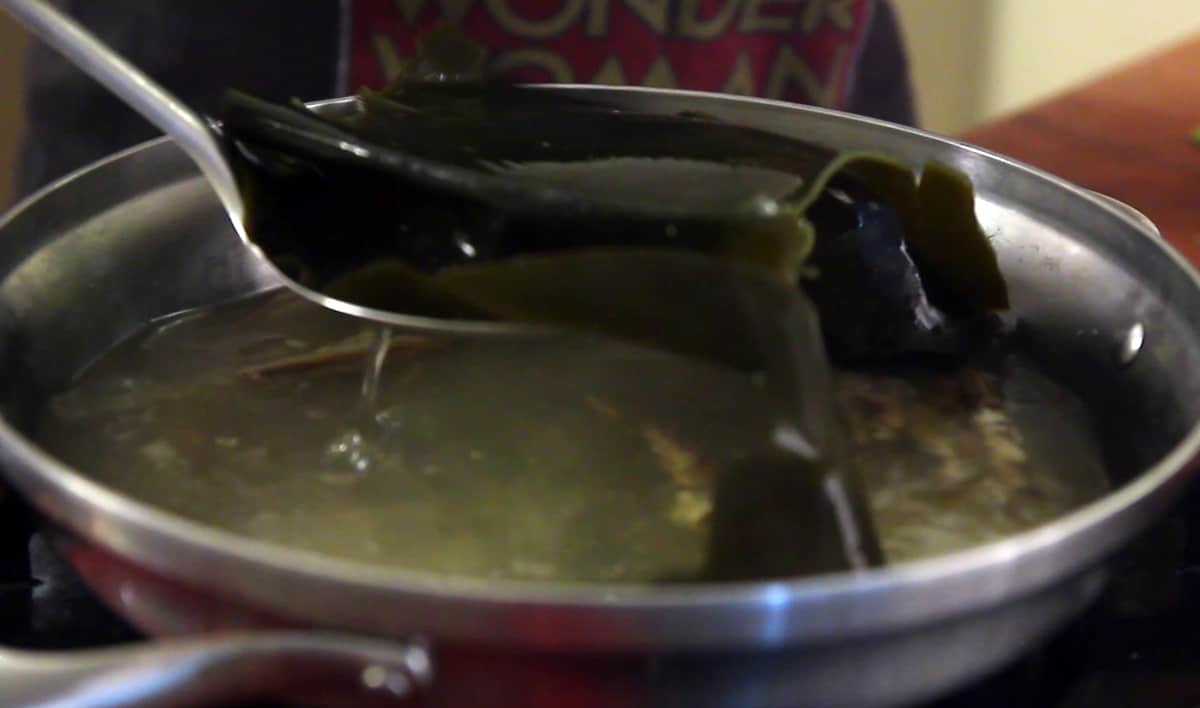
- Boil for 15 minutes over medium high heat without the lid.


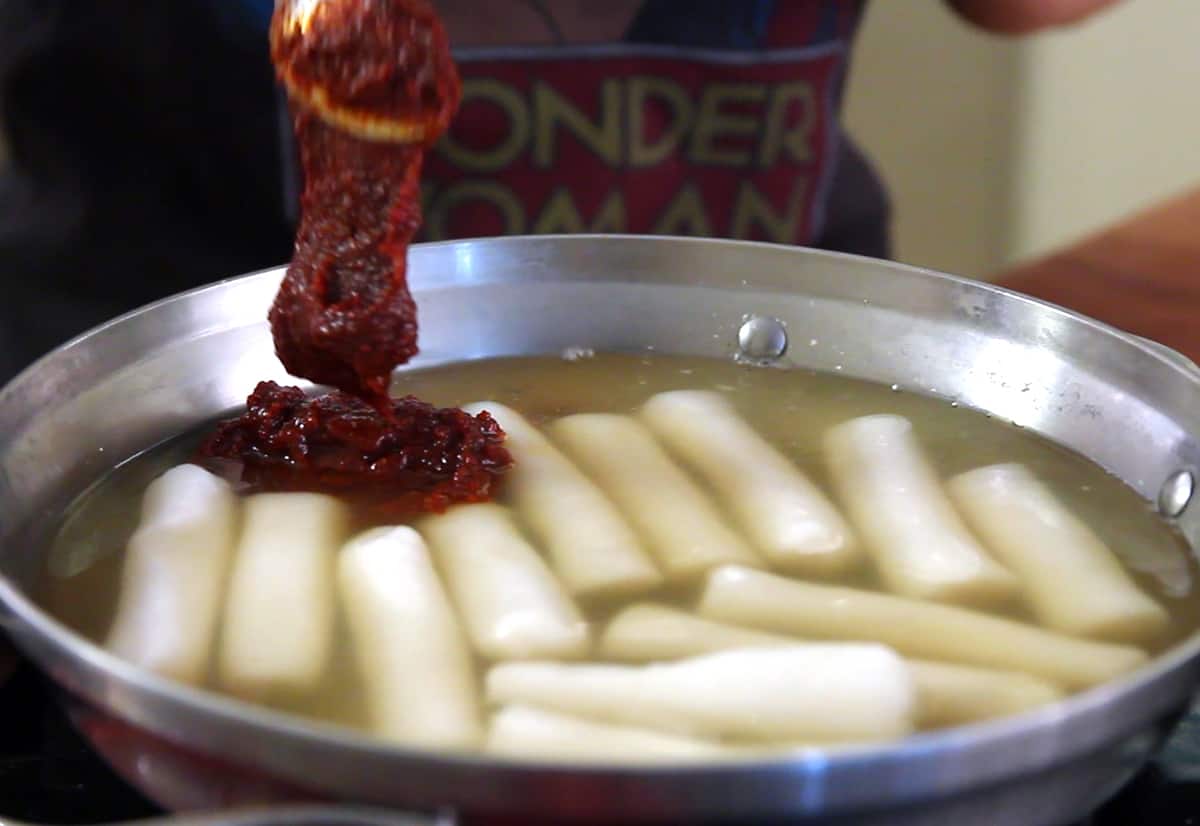
- Combine gochujang (hot pepper paste), gochugaru (hot pepper flakes), and sugar in a small bowl.
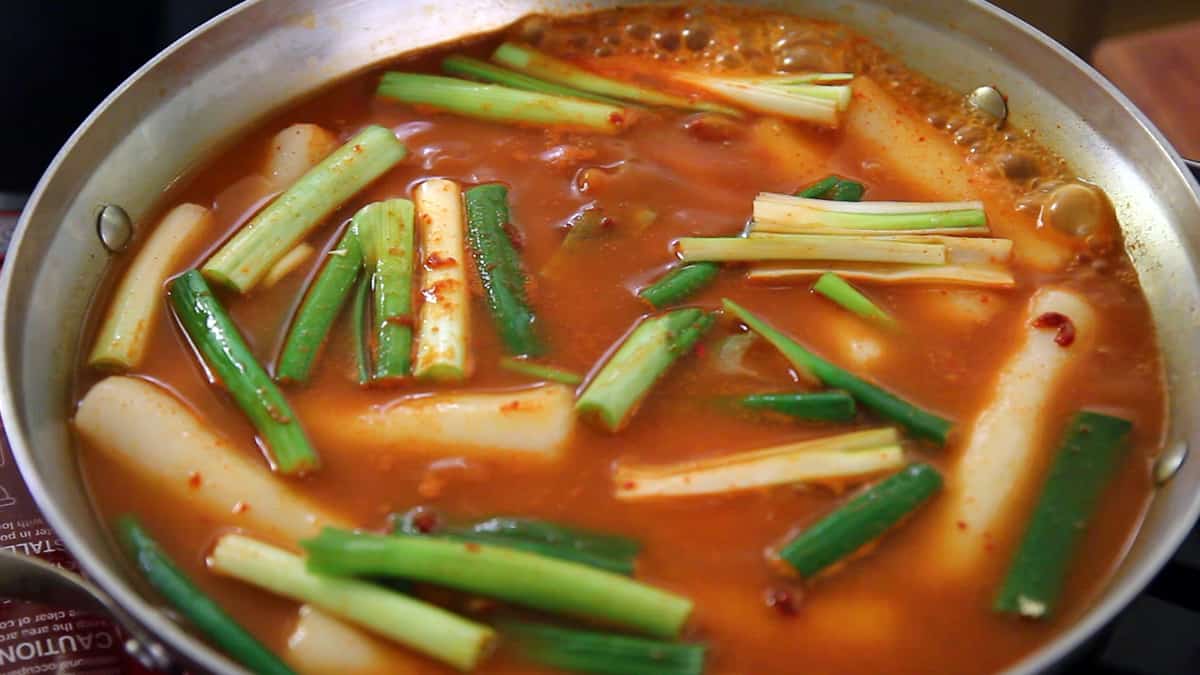
- Remove the anchovies and kelp from the pot. You should have about 2½ cups of stock. If you have less, add water to bring it to about 2½ cups before adding the rice cake. Add the rice cake, the spicy mixture in the bowl, the green onion, and the optional fish cakes and hard boiled eggs.


- When it starts to boil, stir gently with a wooden spoon. Let it simmer and keep stirring it until the rice cake turns soft and the sauce thickens and looks shiny. It should take about 10 to 15 minutes. If the rice cake is not soft enough in that time, add more water and continue stirring until it softens.


- Remove from the heat and serve hot. If you have any leftovers, keep them in the fridge and reheat them when you want to eat. They won’t be as good as when you first made them, but not bad. You should finish them in a few days, but it’s best to eat them all at once right after you make them.


Buy this recipe's ingredients online
I really like Weee! they deliver quality packaged and fresh Korean ingredients to the continental USA. Cheaper and better than Amazon! Check them out!