


Kimchi is a staple of Korean life and many Koreans include it in their meals three times a day. You can eat it by itself, or use it in so many different Korean recipes. When Koreans make kimchi, they make an effort to make the best kimchi possible and include many regional ingredients.
Today I will show you how to make a traditional-style kimchi with oysters, and we’ll also make radish kimchi (“kkakdugi”) with the same kimchi paste, which saves us from having to make these two kinds of kimchi separately. This is how I make kimchi and kkaktugi, because I need both in my house, but you might be interested in my “easy kimchi” (mak kimchi) recipe if you don’t have a lot of time, or in my kakdugi recipe if you want to make only kakdugi, or make my traditional napa cabbage kimchi recipe by itself if that’s all you need. Also, if you don’t like oysters, you can leave them out.
Many people think you have to wait for kimchi to be fermented before eating, but personally I prefer to eat fresh kimchi, as soon as I make it. And I like to make stew (kimchi-jjigae) out of older kimchi.
Ingredients
- 2 large size napa cabbages (about 8 pounds: 3.6 kg) and 2 Korean radishes (about 4-5 pounds: 2 kg)
- 1½ cup of kosher salt
- ½ cup sweet rice flour, ¼ cup sugar, water
- 4 cups of Korean hot pepper flakes (gochugaru)
- 1 cup fish sauce,
- 1 medium sized onion, minced (about 1 cup)
- 1 cup of fresh garlic, minced
- 1 tbs minced ginger
- 7 stalks of green onions, chopped diagonally
- 2 cups worth Buchu (Asian chives), chopped,
- 2 cups of matchstick-cut radish
- fresh oysters (optional)
Directions
- Cut the cabbages in half, and then slit each half through the core, but not through the rest of the leaves.
- Soak each piece in cold water and sprinkle salt over the each leaf , and then set it aside for 2 hours.
*tip: the stems should get more salt than the leaves - Peel 2 kg of Korean radishes and cut them into 1 inch cubes. Do this by cutting them into several disks, and then cutting horizontally, and then vertically. Put them in a big bowl and sprinkle them with ¼ cup of kosher salt. Then set these aside, too.
- 2 hours later, turn the pieces of cabbage over so they get salted evenly. Turn the radishes as well.
- Another 2 hours later, you will see the cabbage look softer than before, and it should have shrunk.
*the total salting process will take 4 hours - Rinse the salted cabbage and radish with cold water 3 times.
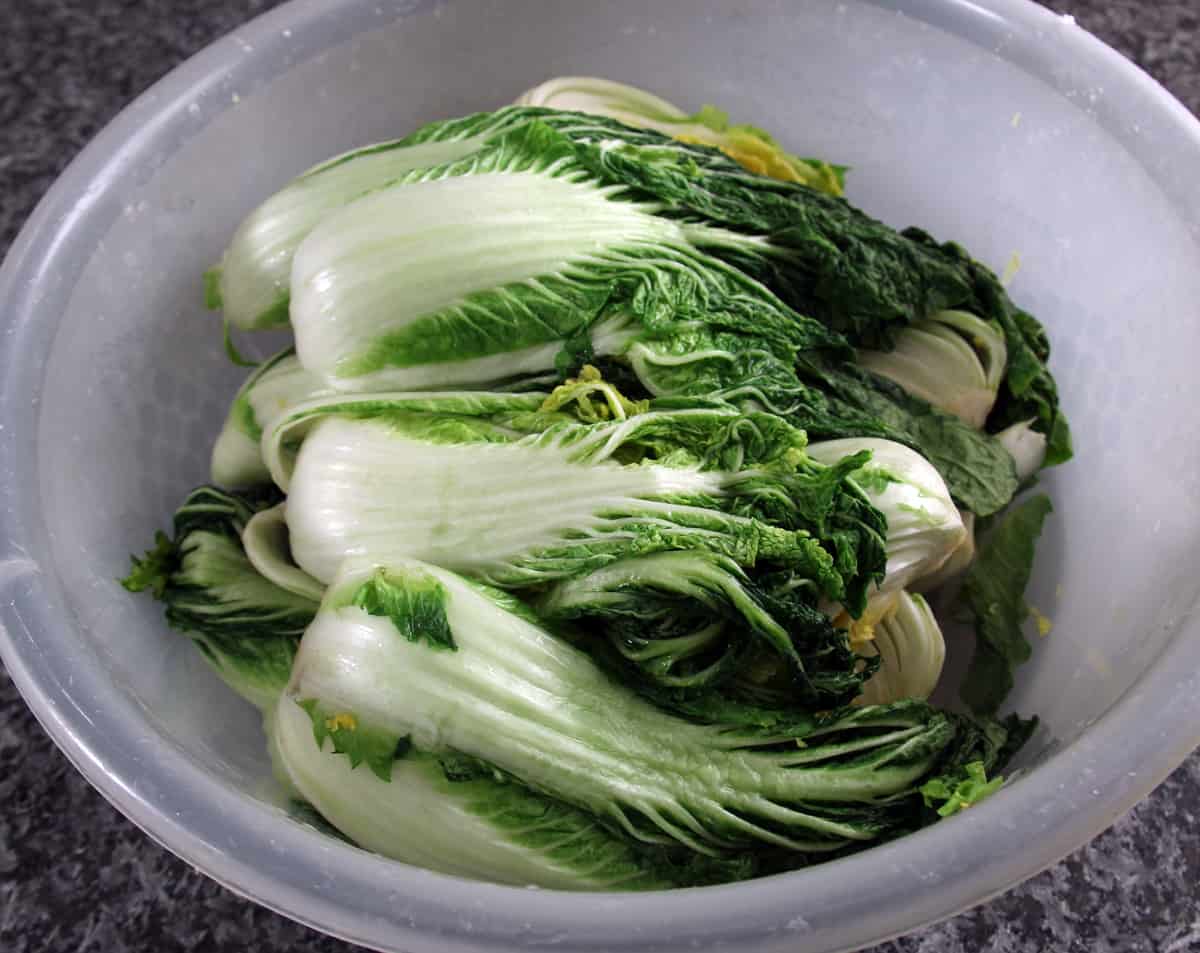
Making Kimchi paste:
Make porridge
- Put ½ cup of sweet rice flour and 3 cups of water into a skillet and mix them up. Then cook over medium-high heat, stirring constantly.
- When you see some bubbles, pour ¼ cup of sugar into the porridge and stir one more minute. Then cool it down.
- Place the cold porridge into a big bowl. Now you will add all your ingredients one by one.
- Add fish sauce, hot pepper flakes, crushed garlic, ginger, and onion
*tip: it’s much easier to use a food processor. - Add green onions, Asian chives, and radish.
- Add 2 cups of frozen oysters, but this is optional. (I found out lots of people can’t eat them.)
- Mix all ingredients well.
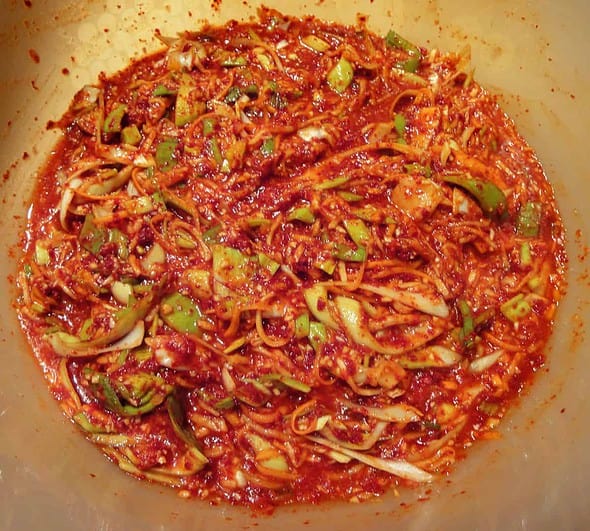

Are you ready to spread our paste on the leaves and make your kaktugi?
* I recommend you wear rubber gloves so that you don’t irritate your skin.
- Spread the kimchi paste onto each leaf of the cabbage, and make a good shape out of the leaves by slightly pressing with both hands.
- Put it into an air- tight sealed plastic container or glass jar.
- Mix your leftover paste with your radish cubes to make kkakdugi.
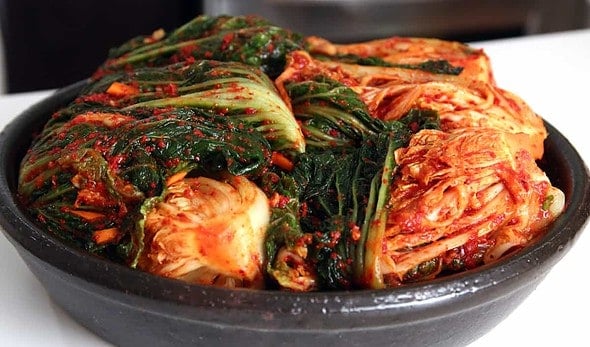

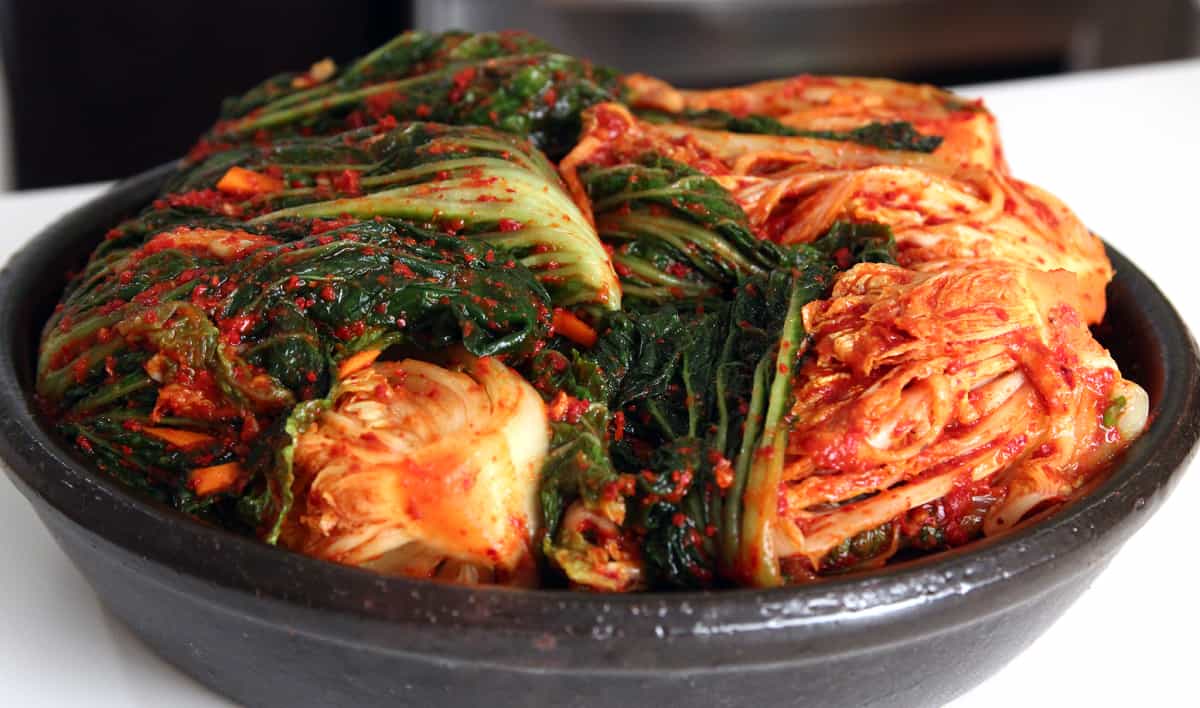
You can eat it fresh right after making or wait until it’s fermented. Put the Kimchi container at room temperature for 1 or 2 days and keep it in the refrigerator.
How do you know it’s fermented or not?
One or 2 days after, open the lid of the Kimchi container. You may see some bubbles with lots of liquids, or maybe sour smells. That means it’s already being fermented.
Buy this recipe's ingredients online
I really like Weee! they deliver quality packaged and fresh Korean ingredients to the continental USA. Cheaper and better than Amazon! Check them out!





Hi Maangchi:
I’ve came across your website while finding for a recipe to make korean food. I was wondering do you know how to make kimchi that is suitable for vegetarians? I normally avoid using onions and garlic when I am cooking.
Thanks!
Theary,
yeah, making kimchi is easier than most people think.
cici,
Thank you for your update! bitter taste? I have no idea! There are no ingredients that taste bitter for kimchi recipe
Dear Maangchi:
I am from Hong Kong. I have tried your recipe 2 days ago, when I taste it today, it is really delicious and is the exact taste I am looking forwards. However, there are still a little bit bitter. Do you know the reason?
Hi,
I made kimchi with Nappa and the taste was like what i expected, i never thought that it would be this easy to make kimchi. Thanks for video it was really helpful.
Bill in Bamberg,
Wow! Korea is like your second hometown! I’m sure your kimchi is very authentic. Yes, you can use anchovy sauce and ground pear in your kimchi paste. I used to make my own salty fermented anchovy sauce (jeotgal) for my kimchi when I lived in Korea. Send me the picture of your kimchi if you can. I would like to see it. : )
Hi Maangchi,
I just happened upon this site this morning and spent an hour or so reading the posts. It just so happens I made a big batch of winter kimchi this past weekend. It’s been fermenting since Saturday and will go in the frig this afternoon (Monday). Having lived in Korea for 14 years (10 years in Pusan and 4 years in Seoul) and then moving to Germany four years ago, there was no way I could go without kimchi. With experimentation and practice, I have perfected my kimchi recipe and my co-workers are constantly bugging me to bring them some. I do pretty much everything you do in your recipe, except I don’t add the oysters. Instead I add one tablespoon of anchovie sauce that I get from an Asian store along with the fish sauce. I think the anchovie sauce is from Thailand or the Phillipines, but I remember that during the 10 years I lived in Pusan, many housewives, 주부, used a similar sauce when making winter kimchi. I also added some Korean pear this time around. Your thought on the anchovie sauce and Korean pear?
I bought a large bag of freshmade (the ladies were making it that day right in front of us) Kimchi, last Sunday. I had a little that day with rice.
I noticed it had raw oyster in it.
Would it still be safe to eat?
I want to make Kimchi Jjigae tomorrow.
ems,
no hot pepper paste in Kimchi making. You should get hot pepper flakes to make kimchi.
Check this out and read others’ comments and my answer, too. Thank you!
https://www.maangchi.com/ingredients/hot-pepper-flakes
hi maagchi,
you sound so friendly and you make cooking seem so easy! well, i watched your youtube video and i can’t seem to find red pepper powder, although i saw red pepper paste. is there any difference there in quality or taste? if i can use the paste, is it okay to skip the rice flour since the paste already has that consistency? thanks!
Joycey,
Please leave your question on the forum. I’m not sure about chili powder because I have never used it for my kimchi.
https://www.maangchi.com/talk/forum/general-discussion
hi maanhchi,
I’m so glad I found your site :D
You did such a good job with the recipes and videos
I was wondering…for the kimchi, instead of hot pepper flakes, can I use chili powder? I can’t seem to find any pepper flakes near me…
Thank you :D
yes, its a dark brownish red color and also when i eat the kimchi it taste right but it seems like the pepper did not blend in with the rest of the ingredients. Thank you for your response!!! i love your recipes!! =)
kauzilla,
hmm, I’m suspicious of your hot pepper flakes. Is the color dark brownish red? I sometimes see bad quality of hot pepper flakes sold in a grocery store. Find good quality of bright red color of hot pepper flakes.
hello!
I tried your kimchee recipe, but my kimchee came out more brown than red, is that normal in some cases or did i do something wrong? if so, how do i correct it? Thank you!!
Christine Cho
oh, right! Thanks! 1/4 cup of sugar is right amount.
hi Ahjuma!
I love your videos! I was trying to make kimchi today…and i noticed that in your video you say “add 1/4 cup of sugar” when adding to the mochiko & water paste…but in your recipe here…it says 1/2 cup of sugar. Just wanted to let you know!
Christine
Chev,
I don’t think the kimchi paste is too salty, but if you use a lot, of course it will affect saltiness in your kimchi. When I make kimchi, I consider the salting of the cabbage a very important process. If I salt it too long or don’t rinse it thoroughly, the kimchi will definitely be too salty. Stick to the recipe and you should be fine!
H+V,
I will cross my fingers for your kimchi!
Hello Maangchi,
thank you very much for this site and all the useful videos. We just tried out the Kimchi recipie and are eagerly awaiting the result tomorrow. Keep up the great work.
H+V
OOps! Sorry about that;) Wondered where I’d get that impression.
Re spreading of paste. I read that alot of the viewers have problems with the kimchi getting too salty. Is it possible that they may be too liberal with the paste since you were saying that the amt for the paste needs to be lessen if you are making less kimchi or radish kimchi. So they just try to use up everything?
Chev,
haha, I’m Maangchi! not Deborah!
Anyway, that’s not very important. Your question,
“Is it very important to keep to the spreading light or I can go heavy with it too”
My answer: The amount of kimchi paste for each leaf of the cabbage really depends on your choice. You can put it lightly or heavily.
Making porridge is part of my recipe.
Hi Deborah,
I saw from your video that you spread the paste onto the leaves sparingly. Is it very important to keep to the spreading light or I can go heavy with it too?
Dear Maangchi,
My friend Jacques introduced me to your site and your wonderful kimchi recipe(s) and video. Thank you very much – yours is the best recipe for kimchi I’ve tested and will be the basis for all my kimchi making in the future. I wrote about you here: http://www.culiblog.org/2008/10/a-kimchi-sunday/ and have linked to the kimchi recipe from my blog. Great work – really comprehensive.
Warm regards,
Debra Solomon / culiblog.org
Food, food culture and the culture that grows our food
hariman,
I’m sure you will be able to make your own delicious kimchi soon just like other people.
hi maangchi thanks so much for you everything for people cooking information,I like kimchi so much and in future I am going to try make myself kimchi,
Maya,
oh, you made it! congratulation!
If you feel your kimchi is not salty enough, add some more.
haha, “the cabbabe behaved correctly”? funny! : )
I usually eat my kimchi right after making it. To make kimchi stew, I use fermented sour kimchi.
Hi Maangchi,
So I made kimchi AND kkakdugi and it didn’t come out half bad! However, I feel like it’s not quite as salty as it should be. When I salted the cabbage and radish they “behaved” correctly, leaking out their water and shrinking but now I wonder if I didn’t use enough salt. Maybe when the kimchi gets more sour it will taste more authentic? I love REALLY sour kimchi (my husband thinks I’m gross). In any case, every time I eat it, I’m still amazed that I made it!
Maya,
If you can make good kimchi, everybody will think you are good at Korean cooking. : ) I hope you get lots of compliments from your in-law family in Korea.
Anyway, kimchi recipe is a little different in every region of Korea. I’m from Southern part of Korea where we use lots of hot pepper flakes and fish sauce, but some people from other regions in Korea may not like my recipe. I love all kinds of kimchi though.
Hi Maangchi, It’s Maya from NYC.
LOVE LOVE LOVE your website.
When I lived in Korea my friends told me they thought it was too hard for me to make kimchi. But now that I’ve seen this video I’m going to try to make cabbage kimchi. (I love kakdugi too but I think my fridge is too small) I’m going to Korea in December to meet my in-laws! I think it’s important that I can say I made kimchi. My Koren friends were very surprised when I made jjajjangmyeon (by following your recipe- I didn’t have measurement issues because I followed the video not the written recipe). It was easy and delicious. Wish me luck!
Maya
PS- there are very few resources for people like me who are interested in Korea cooking but are not Korean (my husband is not much help!). Your website is very important! Good luck with your book.
Bokchoy1489,
You didn’t salt radish. That’s why your radish kimchi is bland. Now you can sprinkle some salt in the kimchi and mix it with a spoon. It’ll be ok.
The amount of hot pepper flakes for this recipe is for 2 medium size of nappa cabbage and 2 radish.
Hi maangchi, I would like to ask you about your radish kim chi recipe. I followed the recipe as you said. Hoever, I did not let the radish sit for a total of four hours, what would this do to the kim chi? Also the recipe calls for 4-6 cups of pepper and I used the powder kind. My kim chi is now fermenting but not sour. it’s actually bland. Also the paste became soo powdery. Is the crush pepper recommended over the powder?
Martha,
Congratulation on your all successful korean cooking!
I’m very glad to hear that.
You can keep your leftover saewoojeot (salty shrimp paste) in the fridge months and months.
Hi Maangchi,
Thanks for your quick reply. However, on the weekend, I tried making Kimchi and Kakktugi without the raw oysters and the salt shrimp sauce as I do not know what to do with the rest of the salt shrimp sauce (the shopkeeper told me it only keeps in the fridge for 1 month).
Both types of kimchi turned out very nice, tasted just like the kimchi sold at our shops here. I could not stop myself eating them fresh. Lucky I have enough to leave them fermented. I keep referring you as my internet Korean teacher and my husband is confused. You see, I am also learning Korean Language as a hobby. So far, I have tried soon do boo, jab chae, kim chi and kakktugi, tok buk gi and kimchi jigae, all from following your recipes. All tasted wonderful. My husband loved them too.
I will try some of your other recipes when I have the time.
Seon Saeng Nim, Kam Sa Hamida.
regards,
Martha from Hoju.
Hi Maangchi,
I have a few questions on your Kim Chi recipe. Since you add raw oysters to the Kim Chi, will it cause food poisoning if the kim chi is not eaten straight away and instead kept for 2 weeks:eg left at room temperature all that time? Or should they go in the fridge after 2 days/or immediately and will keep forever (i.e. longer than 2 weeks, 1-2 mths, etc)? Could oysters be replaced by something if raw oysters is not easily available?
I really enjoyed your utube. Will check if you have eggplant kimchi as I just tasted some in a Korean Restaurant and liked it.
regards,
Martha from Hoju.
Martha,
You can skip raw oysters in your kimchi if you don’t like that. Well made kimchi never goes bad but ferments. You can eat fresh kimchi, too.