


Kitchenware:

Specialized kitchenware you may need for cooking Korean food.

Crinkle cutter

Crinkle cutter

I used this when I made cheongpomuk muchim, but it can be used for a lot of things, usually fruits and vegetables to give them a fun zigzag edge.

Read more...

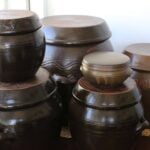
Earthenware pot

Earthenware pot

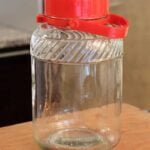
These big onggi pots (or “crocks“) can be used for making  and preserving many things: soybean paste, soy sauce, hotpepper paste, fermented salty fish, rice wine, and of course kimchi. They are good for fermenting and storage. Koreans keep these in the corner of the yard, and sometimes kimchi pots are buried underground so they [...]

Read more...

Stone bowl

Stone bowl

A stone bowl is great for making stew, or even rice. You can put it on the stove directly, and boil for a long time at high heats. You will need this if you want to make dolsot bibimbap, mixed rice and vegetables in a hot stone bowl. Dolsot actually translates as “stone pot” in [...]

Read more...

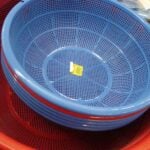
Plastic basket

Plastic basket

A long time ago these baskets were made with bamboo. Of course nowadays plastic is more convenient and common. We use this when we make kimchi, to drain salted cabbage.

Read more...

Stainless steel bowl

Stainless steel bowl

This bowl is perfect for cold noodles (naengmyun). When they serve hot soups, Korean usually use ceramic or earthenware bowls to keep them hot. But cold dishes always taste and feel better in stainless steel bowls.

Read more...

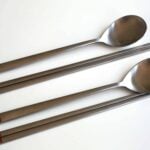
Stainless steel chopsticks

Stainless steel chopsticks

Korean chopsticks are usually made of stainless steel. A long time ago we used brass or silver, and you will also see some people using disposable wooden chopsticks, but most Koreans prefer these stainless steel ones.

Read more...

Tin pot

Tin pot

This pot is really thin, and whatever is inside cooks quickly. We use this for things that shouldn’t be cooked a long time, like instant noodles. This isn’t a good pot for cooking things like pork bone soup, which are cooked over heat for a long time.

Read more...

Samgak kimbap mold

Samgak kimbap mold

This is a mold to make samgak kimbap. This little kit came with the mold and the seaweed together:

Read more...

Rice cooker

Rice cooker

There are many kinds of electric rice cookers available these days. They’re becoming more and more popular in the West and are usually sold in Korean, Chinese, or Japanese grocery stores.

Read more...

Korean bbq grill plate

Korean bbq grill plate

This goes nice with a portable grill. If you take a look at it closely, you will see it’s sloped so that fat rolls off into the hole in the middle.

Read more...

Strainer

Strainer

Good for making anchovie stock. Put dried anchovies inside and boil with water, like I did in my soon du bu chigae and hwe dup bap videos.

Read more...

Rice scoop

Rice scoop

I use a special scoop to get rice out of the rice cooker or pot. You can just use a spoon, but if you make a lot of rice this scoop is easier and more convenient. In Korean it’s called a “ju guk,” and it’s not very expensive, maybe $1.

Read more...

Gas burner

Gas burner

A lot of people ask me about the gas burner I use in my videos. You don’t need to have one, I just use it so I can face the camera when I’m cooking. But Korean people use these all the time to cook bulgogi or sam gyup sal at the dinner table.
If you buy [...]

Read more...

Knives

Knives

People ask me about my knives all the time. They wonder if they are special kinds of knives. But most important is that they are sharp and that they are comfortable in your hand.
On the right is one made by Henkels. I got it on sale so it wasn’t too expensive. It’s a good knife [...]

Read more...

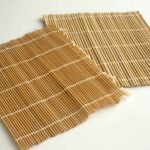
Bamboo mat (kim bal)

Bamboo mat (kim bal)

You’re going to need one of these if you’re going to make Kimbap. They are only a dollar or 2.

I have 2 kinds, but you only need one:

Read more...

Earthenware bowl

Earthenware bowl

In Korean this is “dduk bae kie.” These ones are shiny but I prefer the one’s that aren’t shiny. I used this for soon du bu, doenjang chigae, and sam gye tang. They are perfect because the stone retains the heat until you finish your meal. Of course you can cook without them but your [...]

Read more...