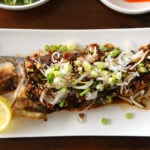
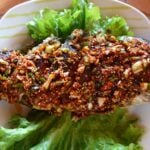
Since leaving Korea and living abroad for many years, I’ve come across a few fish that were unfamiliar to me when I lived in Korea. Two of them are whiting and branzino, and I found that they can be especially delicious when cooked with Korean flavors. In a previous recipe, I used whiting to make […]
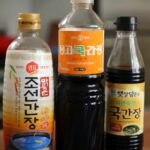
Salty and strong, Korean soup soy sauce (guk-ganjang: 국간장 but also called joseon-ganjang: 조선간장, aka “Korean soy sauce”) is not just for soup, it’s also good for seasoning stews, meat, seafood, and vegetables. It’s very different from the commercial soy sauce you’re used to. That darker and sweeter soy sauce was invented in China and introduced to Korea through […]
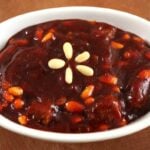
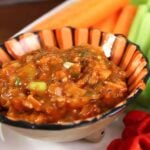
If you’re a fan of Korean gochujang, the spicy, sweet, savory, pungent paste that’s used so often in Korean cooking, you’re going to love yak-gochujang. It’s gochujang fried with beef, honey, sesame oil and pine nuts, and will totally knock your socks off! Yak-gochujang looks simple, but it’s a very special dish. “Yak” means medicine […]
Soup soy sauce is a byproduct of making doenjang. Traditionally, Koreans make their own doenjang at home, so they always have soup soy sauce on hand. It’s very strong, fermented, salty, flavorful, and full of umami, so it’s perfect for flavoring and salting soups and side dishes (which is why it’s called “soup soy sauce,” or […]
I filmed this video in Zihuatanejo, Mexico, a small fishing village in the state of Guerrero. The fish there is so fresh and delicious that I couldn’t resist trying out this simple, tasty, traditional Korean recipe, domi-yangnyeom-gui. It’s fried fish, but what really makes it stand out is the seasoning sauce, where the a mix of savory soy sauce, […]
I am introducing Ssamjang to you today, a kind of Korean dipping sauce. I’ve posted ssamjang recipes in the past, always as a side dish for things like grilled beef (soegogi gui) and grilled pork belly (samgyeopsal gui), but the ratio can vary depending on your personal preference and mood. This is a special ratio for […]