



My cookbooks
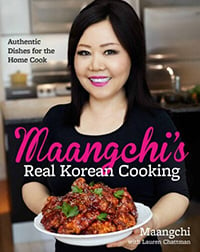
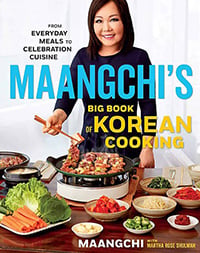
Which to get? Both are best sellers. Choose Maangchi’s Real Korean Cooking for recipes and instructions for making essential pastes and sauces, or Maangchi’s Big Book of Korean Cooking for more recipes, photos, and variety.



This is a library of Korean recipes from my life experience as a Korean home cook: eating, living, cooking, experimenting, fermenting, foraging, learning from my family, friends, people around me, Korean street vendors, restaurants, market stalls, Buddhist monks, and whoever I met who made delicious food that I wanted to learn. : )
I hope you find something here that you can enjoy with your friends and family! Happy cooking!
The all-time most-loved recipes on my website so far!
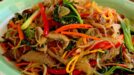
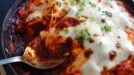
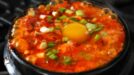
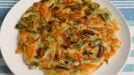
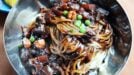
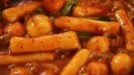
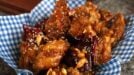
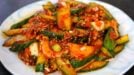
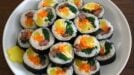
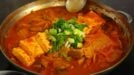
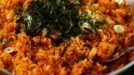
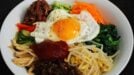
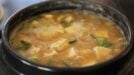
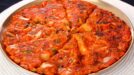
The newest recipes that I've published on my website!
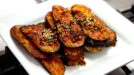
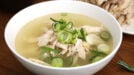
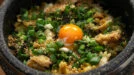
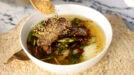
These recipes had some improvements made to them recently.

All the recipes on my website, organized by type:
Essential Korean dish
Banchan makes the meal
Our most important grain
Savory & simple
Tteok for every occasion
Jjigae is our comfort food
Long noodles = long life!
Guk at every meal
Soft tofu stew
Seaweed paper rolls
Special sweet stuff
Consider these mains
Korean dumplings
Drinking food
The Korean way to grill
Double-deliciousness
Nutritious & convenient
Quick & fun
Anyone can make these!
Dosirak made with love
These could be first
Taste of centuries
Korean cuisine basics
Preserved side dishes
Quick-brined
I love spicy food :)
There are plenty!
For meat lovers
Surrounded by the sea
Some new dishes to try
Our most delicious
No fish, meat or chicken
No animal products at all
From Buddhist temples
Chinese style Korean
Quick dishes on the run
Breads & pastries
Good for your health!
Icy, cold, or just chilled
Fruits, grains & herbs
Fusion and western food
<em>Banchan</em> often translated as "side dishes" are an essential part of any Korean meal. They are not just decoration or appetizers: they <strong>are</strong> the meal, along with soup and rice.


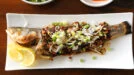
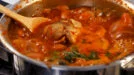
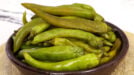
Also: Country-style radish salad | Sautéed cucumbers | Korean meatballs with sauce | Shredded cabbage pickles | Spicy raw fish | Pan-fried seasoned Spanish mackerel | Spicy stir-fried blood sausage | Braised black cod with radish | Perilla leaves jangtteok | Whole garlic pickles | Spicy raw crab | Stir-fried green chili peppers | Mustard greens kimchi | Soy butter pan-grilled chicken | See all side dish recipes
Korean soup, or <em>guk</em> is an essential element of Korean food culture. Many Koreans feel that along with rice, kimchi, and <em><a href="https://www.maangchi.com/recipes/banchan">banchan</a></em>, no meal is complete without it.

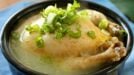


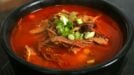

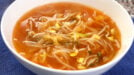
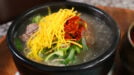

Also: Tofu soup with clams | Korean-style shabu-shabu hot pot | Quinoa nurungji | Knife-cut noodle soup with perilla seeds | Anchovy kelp stock | Beef bone broth | Cold kimchi noodle soup | Kimchi sujebi | Soybean paste soup with spinach and clams | Oxtail soup | Vegetable stock | Doenjangguk with bok choy and tofu | Potato dumpling soup | Spicy chicken & vegetable soup | See all soup recipes
A thick stew, or <em>jjigae</em>, served communally, piping hot, and in an <a href="https://www.maangchi.com/kitchenware/earthenware-bowl">earthenware bowl</a>, is for many the epitome of comfort food.

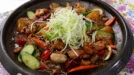

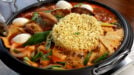

Also: Anchovy kelp stock | Spicy soft tofu stew with beef | Spicy tuna stew | Korean-style mapo tofu | Kimchi stew with tuna | Spicy braised chicken breasts | Extra-strong fermented soybean paste stew | Bulgogi stew in an earthenware pot | Fermented soybean paste stew with scallops | Korean crab stew | Fermented soybean paste stew | Spicy soft tofu stew with kimchi and pork belly | Clam stew | Army Base Stew | See all stew recipes
Kimchi is a traditional Korean dish made of seasoned vegetables and salt. Koreans eat it at nearly every meal. It can be fresh, like a salad, or it can be fermented. While the most popular variety is <a href="https://www.maangchi.com/recipe/tongbaechu-kimchi">spicy kimchi made of cabbage</a>, there are hundreds of different types of kimchi made of different vegetables, and <a href="https://www.maangchi.com/recipe/baek-kimchi">not all of them spicy</a>. Kimchi is also a <a href="https://www.maangchi.com/recipe/kimchiguk">main ingredient in many other Korean dishes</a>.


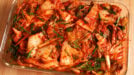


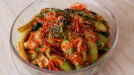


Also: Chayote kimchi | Vegetarian kimchi | Quick, fresh kimchi | Vegetable and fruit water kimchi | Asian chive kimchi | Spicy stuffed green chili pepper kimchi | White Kimchi | Radish water kimchi | Young summer radish water kimchi | Spicy stuffed cucumber kimchi | Napa cabbage kimchi and radish kimchi
Rice is at the center of every Korean meal, with very few exceptions. These recipes express the variety and beauty of the most important grain in Korean cuisine.

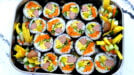

Also: Blackbean sauce over rice | Bulgogi triangle gimbap | Quinoa nurungji | Squash & beef over rice | Egg rice | Rice cooked in eggshells | Spicy pork and vegetables over rice | Chicken gimbap | Korean style curry fried rice with chicken | Healthy vegetable rice bowl | Seafood kimchi fried rice | Beef and mushrooms stir-fried over rice | Fish roe bibimbap | Inside out gimbap | See all rice recipes
Korean mitbanchan are essential, well-preserved side dishes that can be made in large batches and kept on hand in the fridge for long periods of time. The most well-known example is kimchi. You can make a quick, delicious, nutritious meal with a few portions of mitbanchan served with fresh rice.


Also: Fermented pollock roe | Stir-fried kimchi | Steamed perilla leaves | Dried shredded pollock seasoned with gochujang | Braised black beans | L.A. style Korean pickles | Pickled radish | Braised lotus roots | Fried seaweed paper coated with glutinous rice paste | Asian chive kimchi | Spicy stuffed green chili pepper kimchi | Stir-fried garlic scapes | Spicy braised tofu | Braised baby potatoes | See all preserved side dish recipes
Korea has a long history of noodle making and eating. Korean noodles, called "<em>guksu</em>" or "<em>myeon</em>" are everyday food, but also frequently served on birthdays and weddings. Traditionally a long noodle symbolizes a long life, so serving it to someone on their birthday expresses your desire that they live long and happily.
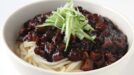

Also: Knife-cut noodle soup with perilla seeds | Noodles & black bean sauce platter | Cold kimchi noodle soup | Kimchi sujebi | Jjapaguri with steak | Stir-fried noodles and vegetables | Crispy seaweed noodle rolls | Cold spicy platter noodles | Knife-cut noodle soup with red beans | Spicy, chewy, sweet & sour cold noodles | Noodle soup | Dumpling wrappers | Homestyle chicken noodle soup | Korean ramen | See all noodle recipes
The Korean word "jeon" is often translated as "pancake," but <em>jeon</em> are not just a breakfast food, they're eaten at all meals as side dishes, or as snacks. At their simplest they're <a href="/recipe/pasanjeok">food coated in flour and egg and then pan-fried with a bit of oil</a>. Some incorporate vegetables, meat, and fish into a batter which is pan-fried with a bit of oil. <em><a href="/recipe/hoddeok">Hoddeok</a></em> is not <em>jeon</em>, but it's closer to the western idea of a pancake.

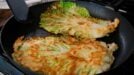

Also: Pan-fried perilla leaves with fillings | Simple potato pancake | Hotteok filled with vegetables and noodles | Pan-fried meat and tofu patties | Mung bean pancakes | Beef pancakes | Pan-fried rice cakes with sweet red bean filling | Shrimp Pancakes | Kale Pancakes | Ramp pancakes | Potato pancakes | Pollock pancake | Tuna pancake | Green onion pancake | See all pancake recipes
The Korean method of grilling beef, pork, chicken, or other types of meat, usually involves having a grill right on (or sometimes <em>in</em>) the table, where people can talk, cook, and eat at the same time. Usually the meat is already cut into small pieces before grilling, and are then wrapped into bite-sized lettuce leaf packages (<em>ssam</em>) with garlic, vegetables, seasoning sauce, salt, and/or sesame oil.


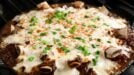
Also: Spicy BBQ chicken drumettes | Minced, seasoned, and grilled beef ribs | Doenjang pork skewers | Spicy pork bulgogi BBQ | Grilled pork belly | Easy bulgogi
Korean fried chicken is typically crispy and crunchy, achieved by double-frying and with creative batter mixes. It's a modern Korean take-out food and drinking snack often served with beer and pickled radishes called <a href="https://www.maangchi.com/recipe/chicken-mu"><i>chicken-mu</i></a>.
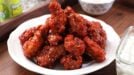
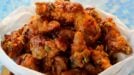
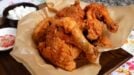
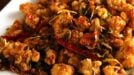
Also: Popcorn chicken gizzards | Sweet and crispy fried chicken
Rice cake, called <em>tteok</em> in Korean, is a much-loved traditional dish with many many variations. No festival day, anniversary, or celebrations is complete without them. They are very chewy, and may be an acquired taste, but once you get hooked you'll crave them all the time.

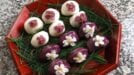
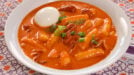

Also: Super-nutritious rice cake | Layered rice cake with red beans | Squash rice cake | Pan-fried rice cakes with sweet red bean filling | Sweetened rice with dried fruits and nuts | Korean Royal court stir fried rice cakes | Long, cylinder-shaped rice cake | White steamed rice cake | Korean-style mochi rice cake | Rice cake | Mugwort rice cake | Rainbow rice cake | Rice cake
If you're new to Korean cooking, these simple, delicious Korean recipes are the easiest ones I know.


Also: Korean Spicy Fish Stew | Boneless sweet crunchy chicken | Carrot cake muffins | Pepper pickles in fish sauce | Country-style radish salad | Sautéed cucumbers | Korean meatballs with sauce | Duyu | Shredded cabbage pickles | Spicy raw fish | Pan-fried seasoned Spanish mackerel | Boiled chestnuts | Steamed radish rice | Hand-torn noodle soup | See all easy recipes
These dishes are delicious, nutritious, and fit into a single bowl for convenient eating and easy cleanup!
Also: Hand-torn noodle soup | Tofu soup with clams | Korean ramyeon with rice cake | Salad bread | Blackbean sauce over rice | Korean-style shabu-shabu hot pot | Squash & beef over rice | Dumplings | Egg rice | Knife-cut noodle soup with perilla seeds | Spicy pork and vegetables over rice | Shrimp porridge | Chicken gimbap | Korean style curry fried rice with chicken | See all one bowl meal recipes
Dosirak (also spelled <em>"doshirak"</em>) are Korean packed lunchboxes, usually made at home, but sometimes store-bought. They are similar to Japanese <em>bento</em> or Indian <em>tiffin</em>, and are usually made with a few different vegetable and meat side dishes, some kimchi, and a serving of rice.


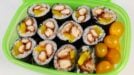
Also: Korean style curry fried rice with chicken | Chicken dumplings | Stir-fried potato and ham | Street toast | Seafood pancakes | Stir-fried kimchi | Dried shredded pollock seasoned with gochujang | Inside out gimbap | Three color sandwich | Omurice | Braised octopus | Pan-fried meat and tofu patties | Spicy braised tofu | Beef pancakes | See all lunchbox recipes
Need something delicious to keep you going in between meals? These can be prepared and eaten in a hurry, on the street, in a pub, or on the go.
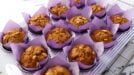
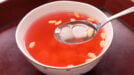

Also: Spicy stir-fried blood sausage | Stuffed persimmons | Boiled chestnuts | Makgeolli bread | Salad bread | Korean honey cookies | Bulgogi triangle gimbap | Dumplings | Jujube ginger tea | Rice cooked in eggshells | Dalgona with nuts | Sweet pressed cookies | Seafood green onion pancake | Kimchi grilled cheese | See all snack recipes
Koreans have long made punches, teas, and alcoholic beverages at home, using the fruits, grains, and herbs at hand to give them flavor and variety.


Also: Yuja tea | Iced coffee | Korean rice liquor | Pomegranate tea | Ginseng jujube tea | Soju Watermelon Cocktail | Ginger tea | Rice punch | Dessert punch with persimmon, cinnamon, and ginger
Traditionally, Korean meals don't usually have desserts served at the end. The sweet things in this category are meant to be served on special occasions, by themselves as refreshments, or with tea.
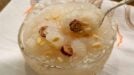


Also: Rice cake punch | Stuffed persimmons | Makgeolli bread | Korean honey cookies | Jujube ginger tea | Dalgona with nuts | Sweet pressed cookies | Crunchy nut candy | Rice syrup | Custard cream bread | Grilled cheese & rice cake skewers | Cinnamon rolls | Super-nutritious rice cake | Cinnamon cookies filled with bean paste | See all dessert recipes
A Korean meal doesn't usually have an appetizer as Western meals do. Side dishes may come out first, but are considered part of the main meal, not as a prelude. These dishes, however, could be used as appetizers in a Western meal.
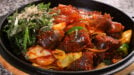


Also: Salad bread | Stir-fried green chili peppers | Braised beef in soy sauce | Spicy cod fillets | Rice cooked in eggshells | Seafood green onion pancake | Quick-fermenting radish water kimchi | Kimchi pancake | Fruit salad | Potato dumpling soup | Crispy seaweed noodle rolls | Beef and mushrooms stir-fried over rice | Seafood pancakes | Spicy chicken & vegetable soup | See all appetizer recipes
Traditionally the main dish of any Korean meal is rice, which is supported by soup and banchan. However, in Korean restaurants these dishes are often presented to customers as main dishes.
Also: Korean Spicy Fish Stew | Boneless sweet crunchy chicken | Sausage gimbap | Spicy raw fish | Beef soup | Braised black cod with radish | Hand-torn noodle soup | Spicy stir-fried pork and kimchi | Tofu soup with clams | Cold soba with dipping sauce | Korean ramyeon with rice cake | Blackbean sauce over rice | Spicy raw crab | Spicy beef bulgogi | See all main dish recipes
Korean cuisine has a long, rich history of fermentation going back thousands of years, and it's part of what makes Korean food distinctly Korean and incredibly delicious. These recipes range from the light and tangy to the deep and complex.


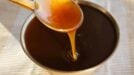
Also: Cold kimchi noodle soup | Quick-fermenting radish water kimchi | Soybean paste soup with spinach and clams | Chayote kimchi | Vegetarian kimchi | Doenjangguk with bok choy and tofu | Fermented pollock roe | Kimchi stew with tuna | Extra-strong fermented soybean paste stew | Extra-strong fermented soybean paste | Vegetable and fruit water kimchi | Spicy stuffed green chili pepper kimchi | Maesil extract | Soup soy sauce | See all fermented recipes
Korean cuisine consists of many vegetarian or vegetable-centric recipes that use seasonal, locally sourced vegetables, often foraged.


Also: Perilla leaves jangtteok | Stir-fried green chili peppers | Korean honey cookies | Jujube ginger tea | Garlic green beans | Dalgona with nuts | Sweet, sour, & crispy mushrooms | Minari side dish | Asparagus side dish | Broccoli with tofu | Crunchy nut candy | Rice syrup | Stir-fried oyster mushrooms | Seasoned seaweed | See all vegetarian recipes
There are many icy, cold, or just chilled dishes in Korean cuisine. They are perfect on a sumer day, or to offset a hot or spicy sidedish.
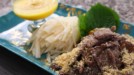
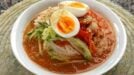
Also: Quick-fermenting radish water kimchi | Chayote kimchi | Fruit salad | Cold spicy platter noodles | Stir-fried fernbrake side dish | Omija punch with pear | Quick, fresh kimchi | Seasoned fresh oysters | Vegetable and fruit water kimchi | Spicy, chewy, sweet & sour cold noodles | Asian chive kimchi | Spicy stuffed green chili pepper kimchi | Korean lettuce salad | Korean rice liquor | See all cold recipes
Chili peppers were first introduced to Korea in the 16th century, and from there there was no looking back: Koreans love a good spicy dish and use chili peppers in a number of dishes, most famously in many kinds of <a href="//www.maangchi.com/recipes/kimchi">kimchi</a>.

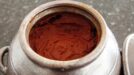

Also: Country-style radish salad | Bok choy kimchi | Spicy raw fish | Soybean sprout & kimchi soup | Creamy, spicy rice cakes | Spicy stir-fried blood sausage | Beef soup | Braised black cod with radish | Perilla leaves jangtteok | Spicy stir-fried pork and kimchi | Korean ramyeon with rice cake | Spicy raw crab | Mustard greens kimchi | Spicy beef bulgogi | See all spicy recipes
Beef has traditionally been expensive in Korea, so beef dishes almost always use the ingredient in moderation, often mixed with (or wrapped in) vegetables.

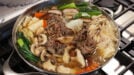
Also: Korean-style shabu-shabu hot pot | Squash & beef over rice | Braised beef in soy sauce | Soybean paste stew with beef | Pan-cooked beef salad | Spicy soft tofu stew with beef | Noodles & black bean sauce platter | Soybean paste soup with spinach and clams | Jjapaguri with steak | Stir-fried noodles and vegetables | Oxtail soup | Korean-style mapo tofu | Beef and mushrooms stir-fried over rice | Minced, seasoned, and grilled beef ribs with cheese | See all beef recipes
Chicken is very common in Korean cuisine, traditionally prepared in porridges, soups, and stews.

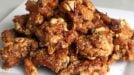

Also: Spicy chicken skewers | Chicken gimbap | Korean style curry fried rice with chicken | Chicken dumplings | Stir-fried noodles and vegetables | Korean-style mapo tofu | Beef and mushrooms stir-fried over rice | Spicy chicken & vegetable soup | Korean market-style fried chicken | Stir-fried chives, meat, and vegetables | Roasted chicken | Spicy BBQ chicken drumettes | Honey butter fried chicken | Spicy garlic fried chicken | See all chicken recipes
For a long time, eating pork was discouraged in Korea, so most uses of the ingredient are relatively recent. Koreans made up for lost time, however, with some truly delicious and iconic pork dishes.
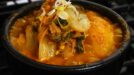


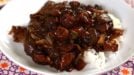
Also: Dumplings | Kimchi pork ribs | Spicy pork and vegetables over rice | Noodles & black bean sauce platter | Stir-fried noodles and vegetables | Korean-style mapo tofu | Stir-fried chives, meat, and vegetables | Spicy pork stew | Braised pig's trotters | Kimchi pork buns | Mung bean pancakes | Korean-style curry rice | Braised kimchi & pork | Pork wraps | See all pork recipes
Most of Korea is a small peninsula, so Korean cuisine has a wealth of seafood dishes, prepared in many different ways: boiled, braised, roasted, grilled, dried, fermented, and raw.


Also: Spicy raw fish | Pan-fried seasoned Spanish mackerel | Braised black cod with radish | Tofu soup with clams | Spicy raw crab | Korean-style shabu-shabu hot pot | Braised beltfish | Spicy cod fillets | Anchovy kelp stock | Shrimp porridge | Seafood green onion pancake | Fish cake noodle soup | Seasoned seaweed | Spicy tuna stew | See all seafood recipes
Which to get? Both are best sellers. Choose Maangchi’s Real Korean Cooking for recipes and instructions for making essential pastes and sauces, or Maangchi’s Big Book of Korean Cooking for more recipes, photos, and variety.