korean food pages

  1. Goguma mattang

    Candied sweet potato (Mattang: 맛탕)

    Mattang is a delicious, easy to make sweet that’s chunks of sweet potato coated in translucent hot brown syrup. They are super crunchy on the outside and warm and fluffy on the inside. It’s so simple and easy to make but freshly made mattang is really irresistible, with an amazing, loud crispy crunch but then […]

  2. Ox bone soup (Seolleongtang)

    The milky broth is achieved by simmering for hours and hours. There’s no rule to how many hours you have to boil it, but I can tell you that you need simmer until you get a milky broth, and the bones are smooth with no more meat is sticking to them. The bone marrow should be all boiled away so that there’s a cavity in the center of each bone. The inside of the bones should look like a sponge.

  3. My readers’ 1 month project: making ojingeojeot

    My readers have started making fermented squid. Let’s see how it looks after a month.

  4. Field trip for Korean-Uzbek cuisine on Nov 6, 2010

    I’m going to “Cafe At Your Mother-in-Law” Brighton Beach, Brooklyn and you’re welcome to join me!

  5. salty fermented squid

    Fermented squid side dish (Ojingeojeot)

    I used to make salty fermented anchovies every year when I lived in Korea. It was very easy to make! I mixed fresh anchovies with a lot of salt and put them into a huge earthenware jar. About 6 months later, the achovy jeot fermented well! I used to use them in my kimchi paste, or I took some from the jar and mixed with seasonings to use as a side dish.

  6. kuksu

    Korean-Uzbek Cuisine

    It’s fascinating how my Korean ancestors ended up living in Uzbekistan and they kept Korean food in their lives, while integrating it with local Russian style cuisine.

  7. Korean food photo contest winners

    Winners from Denmark, Brazil, Germany, Korea, Canada, the Netherlands, Singapore, America, and Malaysia.

  8. yubuchobap

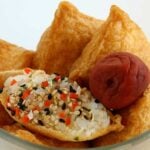
    Fried tofu stuffed with rice (Yubuchobap: 유부초밥)

    Yubuchobap, made with seasoned fried tofu and rice. It originated from Japan, but it’s very popular lunch box and picnic food in Korea. You can make it very easily at home because these days ready-made kits of ingredients for yubuchobap are sold at Korean and Japanese grocery stores. You may find them in Asian grocery stores, too.

  9. Rice, scorched rice, & scorched rice tea (Bap, nurungji, & sungnyung)

    How to make rice in a pot, without a rice cooker.

  10. Hurry up! Vote for the People’s Choice award!

    Hi everybody! If you haven’t voted yet for the People’s Choice award in my Korean food photo contest, please hurry up. Only a few days are left for voting! Just log in and choose your favourites. As I mentioned before, this photo contest is not the best way to choose delicious Korean food, because we […]

  11. Maangchi’s meetup in California, Sep.21 2010

    A report from our meetup on Sept 21, 2010.

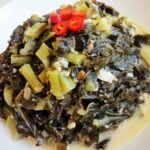
  12. Korean-style collard greens side dish

    Collard greens are not a familiar vegetable in Korean cuisine. However, since the vegetable is nutritious, healthy, and delicious, I wanted to use it in my cooking. First I tried to make kimchi with it, but it turned out too tough. Then I tried cooked collard greens at a BBQ restaurant in New York and […]

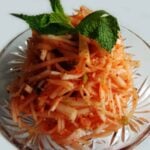
  13. Radish salad (Musaeng-chae)

    Musaeng-chae is one of the easiest and most common Korean side dishes. A good quality Korean radish is firm, and the taste is juicy, sweet, and crunchy! Choosing a good radish is very important to make good musaeng-chae. How can you know if it’s firm and juicy? The outer skin should look smooth and shiny, […]

  14. dwaejigogi-bokkeum

    Spicy stir-fried pork (Dwaejigogi-bokkeum)

    Dwaejigogibokkeum is sometimes called jeyuk bokkeum or even dwaejibulgogi bokkeum. This recipe is very easy, delicious, and fast! You can make a huge plate of dwaejigogibokkeum in 20 minutes!


  15. Asian Feastival

    Maangchi will do a cooking demo at Asian Feastival on Sept 6, 2010 in Flushing, New York.