When I lived in Korea, whenever I saw fresh chwinamul in the open air market for the first time in spring, I felt that spring was really in the air! And when I tasted chwinamul for the first time that year, I felt revitalized with energy from its slightly bitter taste and distinctive flavor. …Dried chwinamul is very tough and hard, and each stem looks like a thin thread. How can you possibly make it edible? It will never get softer by soaking in cold water for only 30 minutes. You’ll have to soak it overnight!
The milky broth is achieved by simmering for hours and hours. There’s no rule to how many hours you have to boil it, but I can tell you that you need simmer until you get a milky broth, and the bones are smooth with no more meat is sticking to them. The bone marrow should be all boiled away so that there’s a cavity in the center of each bone. The inside of the bones should look like a sponge.
I used to make salty fermented anchovies every year when I lived in Korea. It was very easy to make! I mixed fresh anchovies with a lot of salt and put them into a huge earthenware jar. About 6 months later, the achovy jeot fermented well! I used to use them in my kimchi paste, or I took some from the jar and mixed with seasonings to use as a side dish.
Collard greens are not a familiar vegetable in Korean cuisine. However, since the vegetable is nutritious, healthy, and delicious, I wanted to use it in my cooking. First I tried to make kimchi with it, but it turned out too tough. Then I tried cooked collard greens at a BBQ restaurant in New York and […]
Musaeng-chae is one of the easiest and most common Korean side dishes. A good quality Korean radish is firm, and the taste is juicy, sweet, and crunchy! Choosing a good radish is very important to make good musaeng-chae. How can you know if it’s firm and juicy? The outer skin should look smooth and shiny, […]
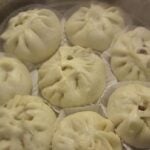
“We used to make a large quantity at once, enough to eat for the whole winter. We kept hundreds of steamed pork buns in earthenware pots in the yard. The weather was so cold that the buns were frozen the whole winter, until we finished them. They were hard as stones the whole time. We ate them every other day, not as a snack, but as a meal. We used to bring some frozen buns to the kitchen, thaw them out, steam them, and eat them.”
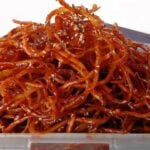
Dried shredded squid are moist and chewy with a strong squid flavor. They are often eaten straight, as a snack. You can find them in the dried seafood section of Korean grocery stores next to the dried squid threads, which are similar but not nearly as soft.
Ojingeochae muchim is one of the most popular side dishes for Korean lunchboxes (“doshirak“). I learned this recipe from my cousin Kyeong in Korea, who was attending university when I was in high school. I couldn’t believe how tasty it was when I tasted her ojingeochae muchim because it was much softer than my own […]
This chicken and chicken soup called Yeonggye-baeksuk in Korean (영계백숙) is a simple, communal dish that’s delicious, filling, and easy to share with many people. It uses a young chicken between 3 and 4 pounds which is boiled and then served with a rice porridge made from the broth. I remember my grandmother on my […]
Note – This recipe combines 2 sujebi recipes that I eventually updated to make more specific recipes and videos for: traditional sujebi and kimchi sujebi. The updated versions may be easier for you to follow. ~ Maangchi Sujebi is a traditional Korean noodle soup, and is well-loved and popular among Koreans. The noodles are made […]
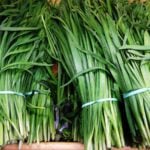
These tender shoots are sold fresh in Korean grocery stores. They have a bit of a garlicky kick and add flavor and color to many dishes in Korean cuisine. Scallions are an acceptable substitute, or the green part of green onions, or even spinach. They dry out and go bad easily, so once I bring […]