I sometimes think Maangchi is not me but kind of 3rd person! So I’m calling myself “Maangchi in …” As I mentioned before, I have been interviewed by Korean radio broadcasting companies and newspaper reporters. Some readers told me that I was on the Korean news on Monday night. Here’s the clip from KBS (Korean […]
Hi, everybody, You might be wondering why some people are leaving illegible comments on my website, or if you have Korean fonts installed, you might wonder why there are so many Korean comments these days? Dakshana Bascaramurty wrote about me in The Globe and Mail last week, which is Canada’s biggest newspaper. Ever since then I’ve […]
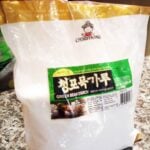
Sometimes incorrectly labeled as mung bean flour (probably because mung beans look like green beans when they’re in the pod), this is a finegrained starch extracted from mung beans. It is used to make noodles and side dishes. With one small package, you can make a huge amount of jelly. Use what you need, then […]
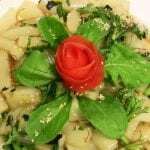
Hi, everybody, I’m going to introduce another side dish recipe to you. Cheongpomuk-muchim is made with mung bean starch. It’s sugar-free and fat-free but delicious. What’s the taste like? Hmmm, if you like noodles, you’ll like it. As you see in the video tutorial, I add 1 teaspoon of salt for 7 cups water and the starch powder, […]
Hi, everybody! Happy Holidays! I’ve picked some recipes for you! It’s cold cold! How about making some steamy hot soup or special dishes to enjoy with your family members during holidays? Your homemade food will give your family warmth and coziness! I suggest making these delicious dishes. Sweet and sour beef (tangsuyuk): It’ll be perfect […]
Tikal My 2 week trip to Guatemala was done successfully. I could not check my email, Youtube, and my blog comments everyday. Maybe every other day when I found an internet café, I could only approve the comments, but no answer. Approving comments took about 1-2 hours. It was impossible to answer everybody’s questions. I […]
Simple, nutritious, savory, delicious, budget-friendly and a loooongtime Korean staple: there are many kinds of soybean paste soup but baechu-doenjangguk is the all-time king!
I’m going to introduce a beautiful Korean rice cake today. It’s called mujigae-tteok (무지개떡). Mujigae means rainbow, so my ancestors must have got the idea for the name from a rainbow! I love it! This is an example of how they incorporated natural beauty into their everyday life. Even though the name of the rice […]
On Saturday Oct.24, I took bus number 166 to New Jersey with one of my readers Kristi to go to our meetup place. Our meetup place was not a fancy restaurant but a huge Korean shopping center! It was only 20 minutes ride from Port Authority bus terminal in Manhattan and the round trip tickets […]
I’m going to introduce these 2 kinds of Korean style squash pancakes to you today: zucchini pancake and butternut squash pancake. Unlike zucchini, butternut squash is an unusual ingredient in Korean cuisine. When I saw butternut squash for the first time in my life in USA, I asked my friend Jenny to give me her butternut […]
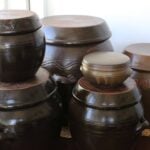
These traditional Korean earthenware crocks can be used for making and preserving many things: soybean paste, soy sauce, hot pepper paste, fermented salty fish, makgeolli, and of course kimchi. They’re made from clay, and when fired leave microscopic holes that allow them to breathe, which makes them great for fermentation. These crocks are called “onggi” which means “Korean earthenware” […]
This bowl is carved out of stone and is great for making soup, stew (jjigae), or even rice. You can put directly on the stove or over an open flame and boil anything for a long time over high heat. And when you remove it from the heat, the heat in the stone will continue to […]
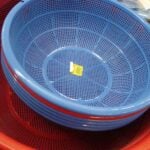
A long time ago these baguni baskets were made with bamboo, but of course nowadays plastic is more convenient and common. I use mine all the time, but especially to drain salted cabbage when making kimchi. They are a few dollars and can be found in any Korean grocery store.
These bowls are perfect for cold noodle dishes like mul-naengmyeon and bibim-naengmyeon. When Koreans serve hot soups and stews, they usually use ceramic or earthenware bowls, which tend to keep them hot and hearty. But cold dishes always taste and feel better in stainless steel bowls. They are light and inexpensive and can be found in any Korean […]
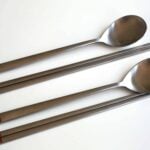
Koreans use chopsticks to eat the side dishes served with rice and soup. Korean chopsticks are made of metal, and are thin, flat, and squared off at the end. They are heavier and thinner than wooden and bamboo chopsticks and shorter than most Chinese chopsticks. A long time ago we used to use brass or […]