


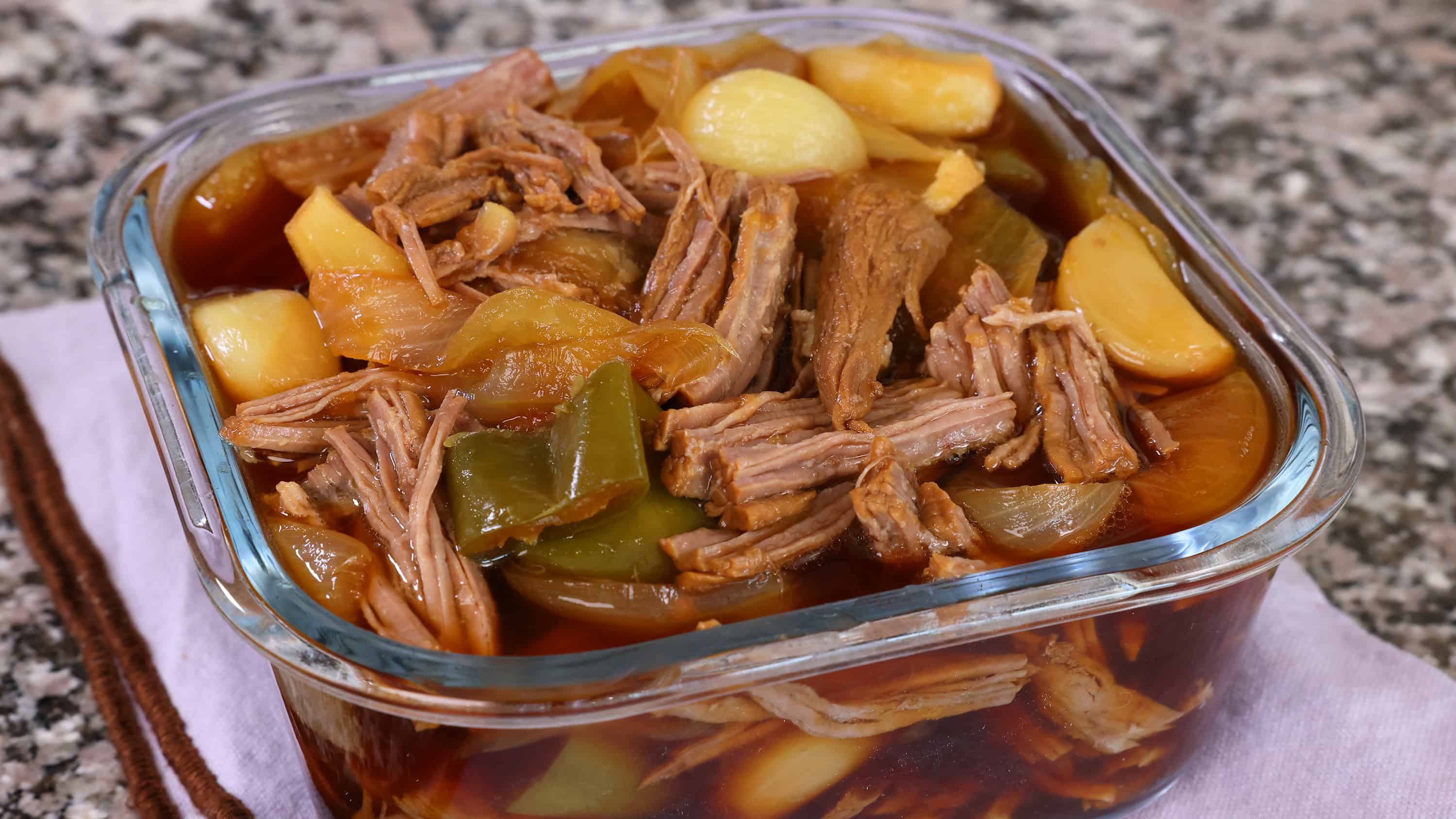
Today’s recipe is a salty beef side dish called jangjjorim, one of the most popular Korean side dishes. A piece of salty, flaky, and a little chewy beef on a spoonful of rice tastes delightful! The beef soaked in a garlicky, peppery savory broth is very flavorful, so you don’t need a lot of it to enjoy it, or to get the taste. It’s meant to be served together with rice and other side dishes, which makes it a great item for lunchboxes.
When I was young, beef was very expensive in Korea, so my mother seldom made jangjorim. But once in a while I tasted it I really loved it. In elementary school we kids brought our lunchboxes to school and me and my friends would sit together at lunchtime and share our side dishes with each other. I was always excited to see what side dishes my friends brought! I was always excited at lunchtime.
There was a rich girl in our class who didn’t eat with us. Her family was running the biggest bookstore in the city. She was the only girl in school whose family’s maid brought her a warm lunch at lunchtime. Me and my friends had rice and kimchi and simple side dishes such as stir-fried anchovies, braised beans, and fishcakes. It was delicious but I could see the rich girl had things like jangjorim and warm bulgogi. Around that time even a sunny side up egg was a luxury for us. I used to envy the kids who had a cooked egg over their rice.
How much things have changed! Now I can easily afford meat and eggs but I need to cut down because too much cholesterol is not good for me.
I posted a jangjorim recipe on my website years ago that used less beef and added ingredients like boiled eggs and more green chili peppers. This new recipe I’m showing you today is the more traditional way, which concentrates on the braised beef. The other recipe uses honey, but this one uses an onion for sweetness instead. Feel free to add a little honey or sugar if you like it sweeter.
You can store in an airtight container in the fridge for up to one week, or even longer if you add more soy sauce. Even though we trim the fat off the beef you may find that after refrigerating there’s some tiny white solid fat floating on top. I always warm it up in the microwave before serving, and then it looks and tastes just like it is freshly made.
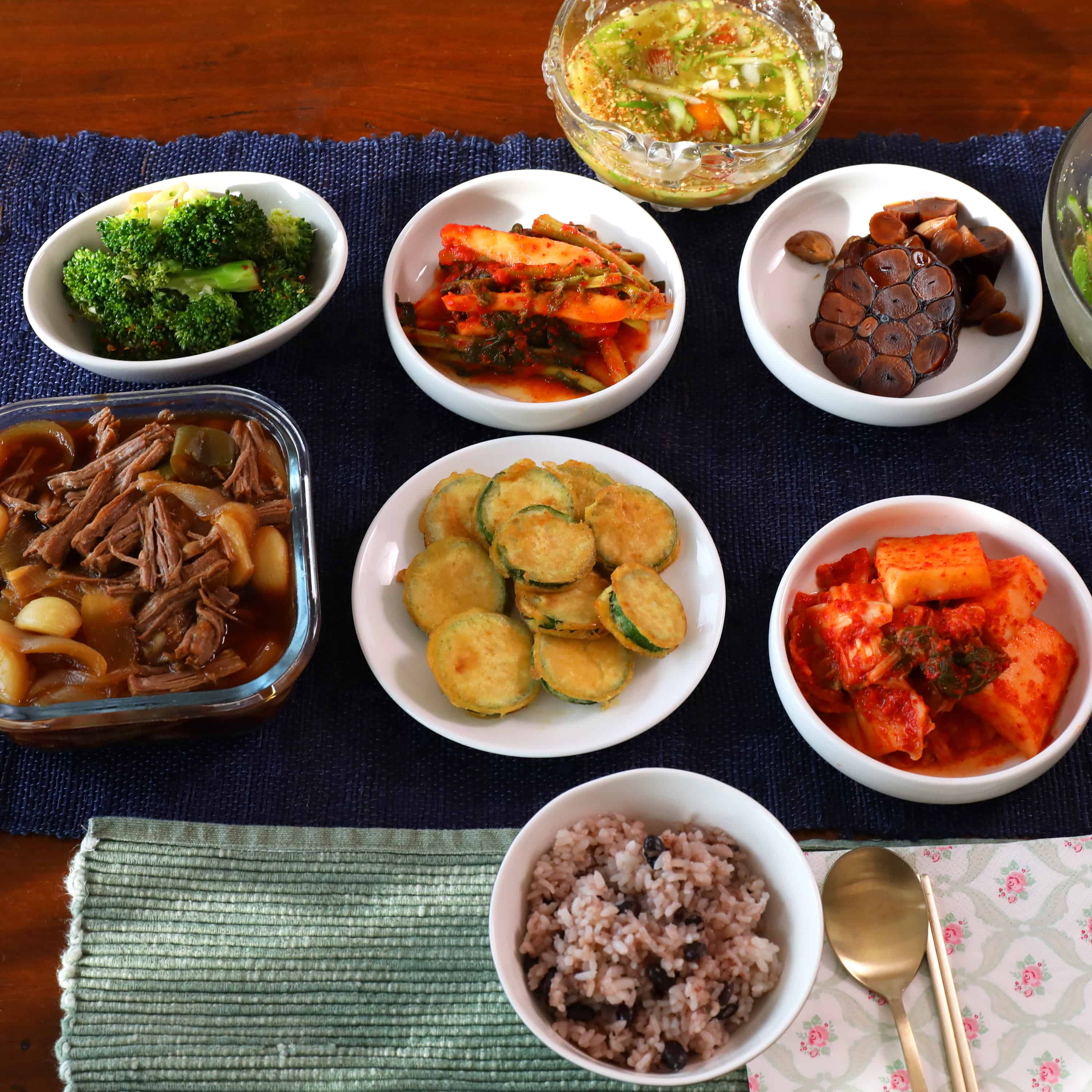
My Korean lunch table with jangjorim
Ingredients
- 1 pound beef flank steak (or beef brisket, beef eye round, shank meat, or any beef with a grain), cut along the grain into 2½ x 1½ x ¼ inch pieces
- water
- ½ cup soy sauce
- 12 garlic cloves
- 1 medium onion (about 6-7 ounces)
- 2 green chili peppers (serrano peppers, jalapeño peppers, or mild shishito peppers), cut into ½ inch pieces
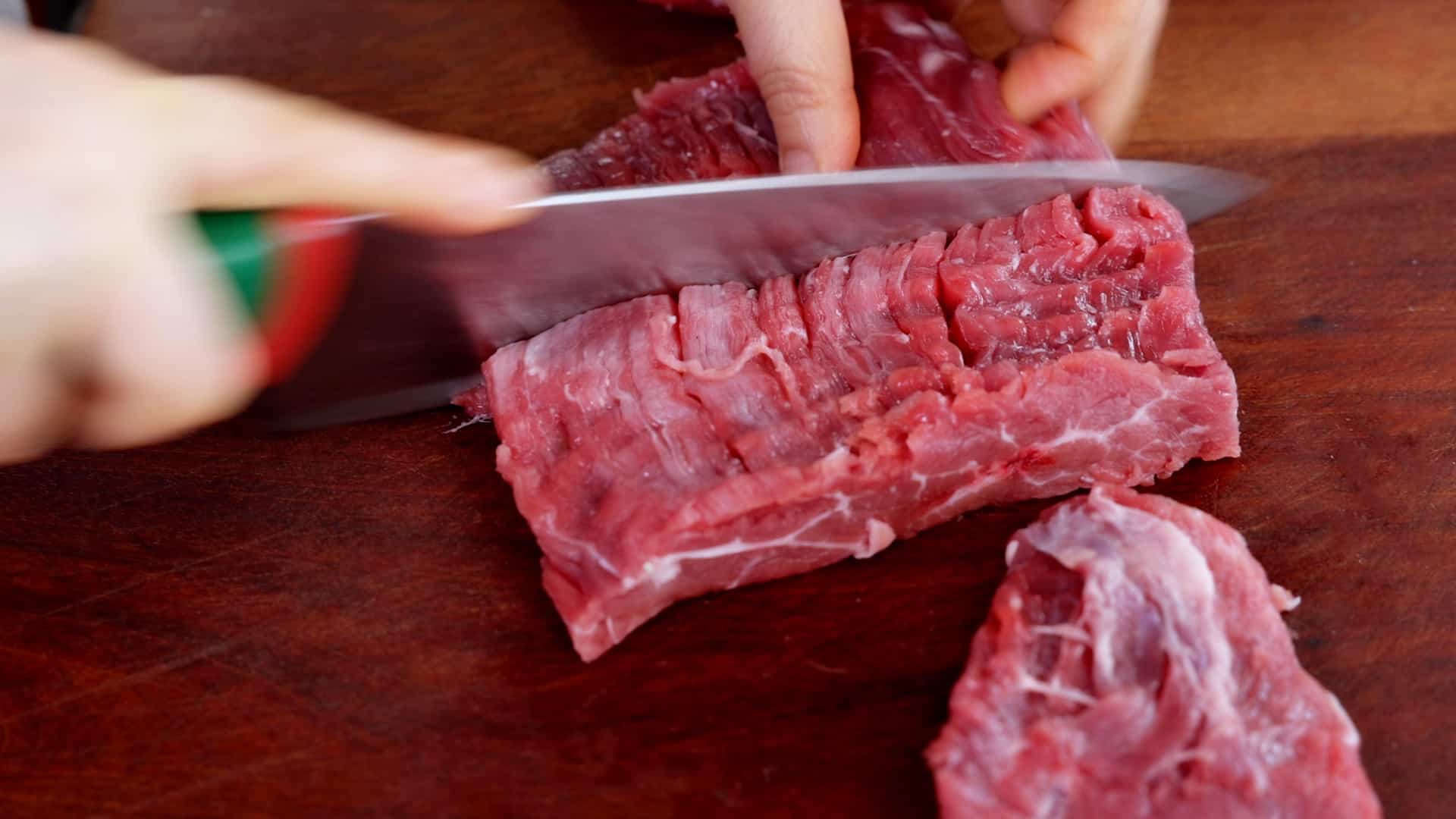
Directions
- Put the beef in a heavy pot with 3 to 4 cups of water. Cover and boil for about 7 to 8 minutes over medium-high heat until brownish foam comes up to the surface.


- Drain and rinse the beef under cold running water, and drain again. Wash out the pot to remove any brown foam and bits.
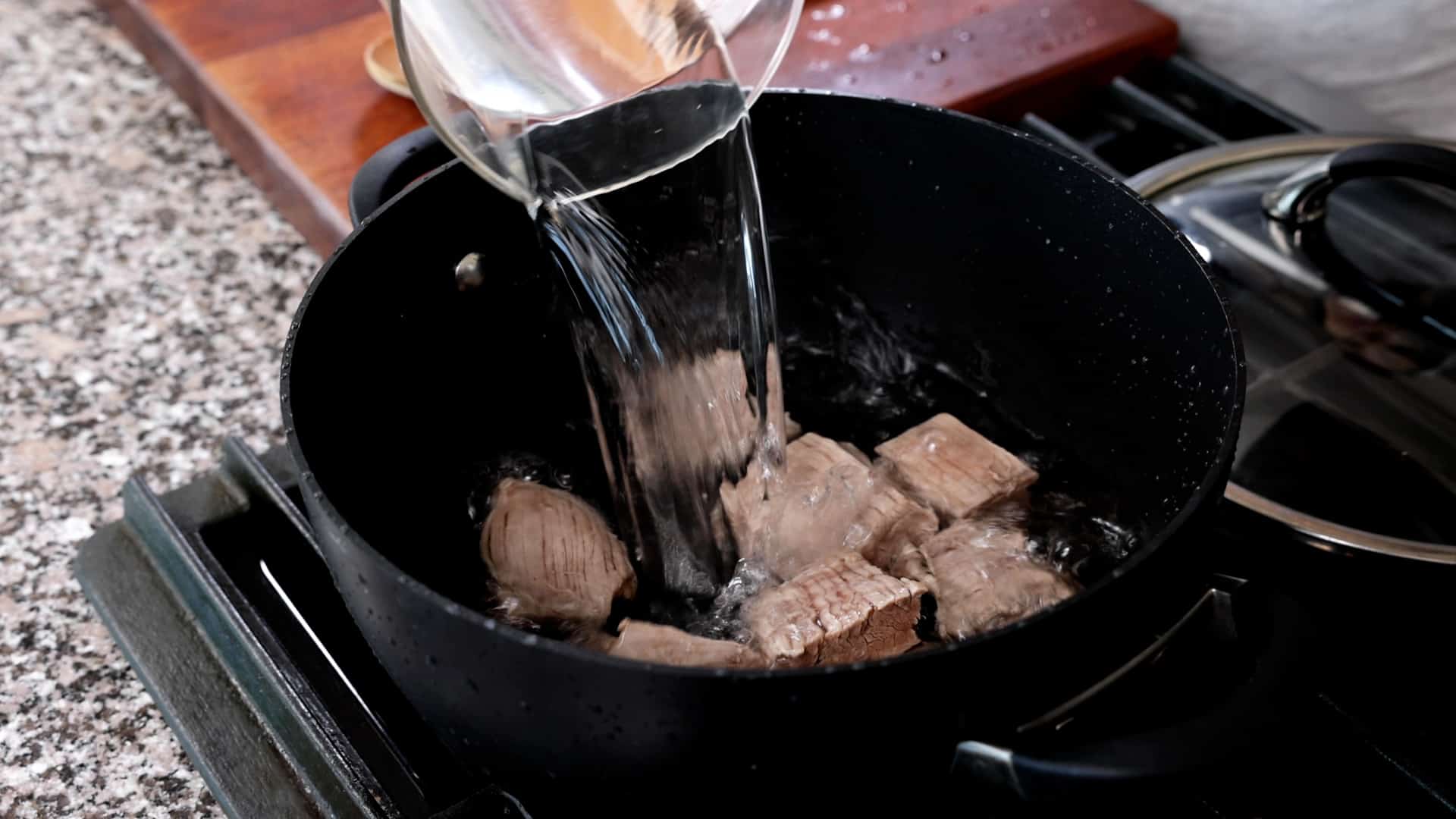
- Return the beef to the clean pot. Add 4 cups water, cover, and cook for 50 minutes over medium heat until the beef gets tender.

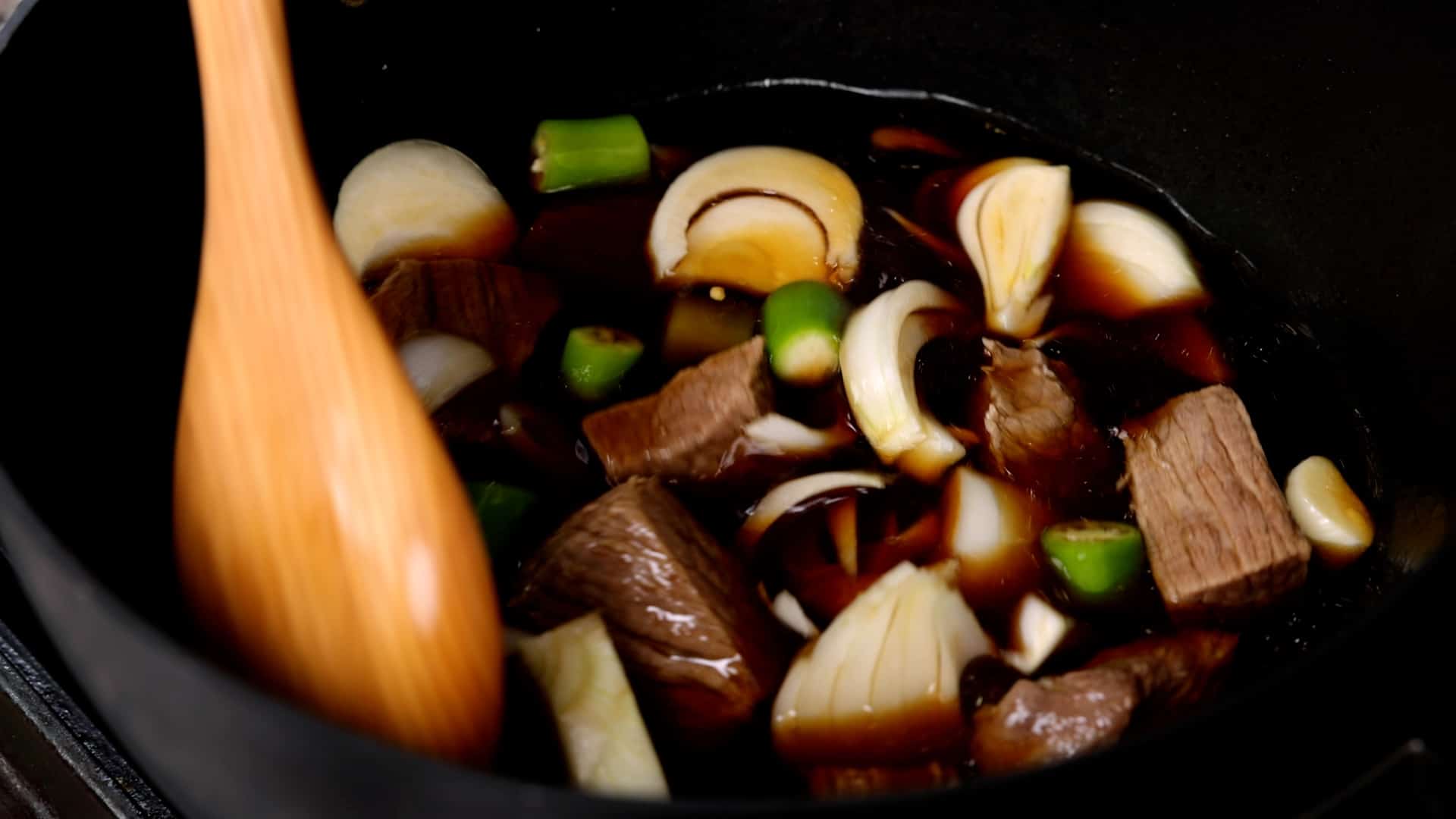
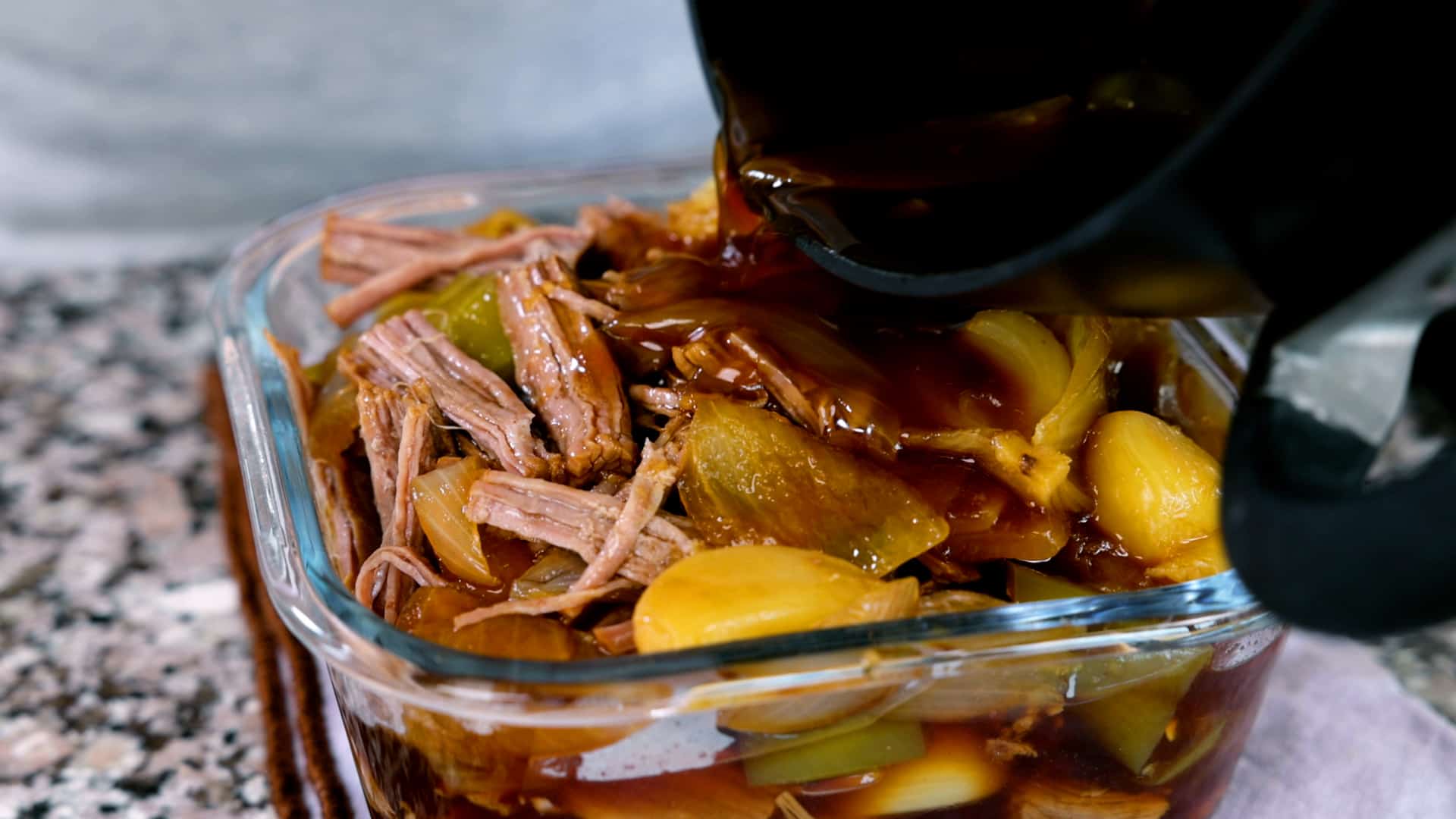
- Add the soy sauce, ½ cup water, garlic, onion, and green chili pepper. Stir a few times with a wooden spoon.
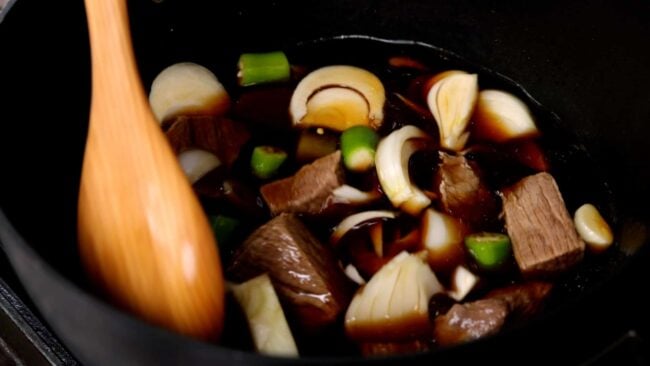
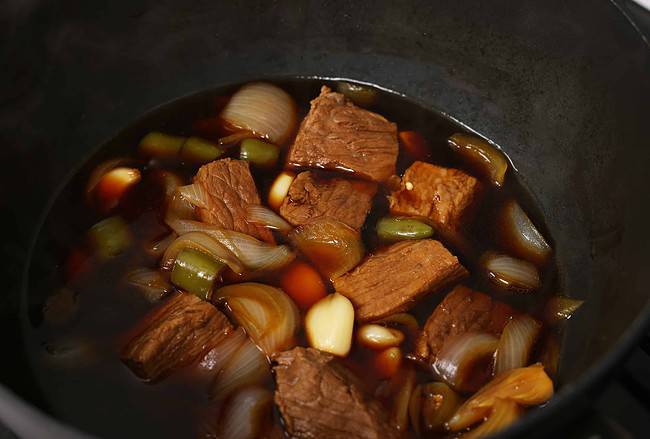
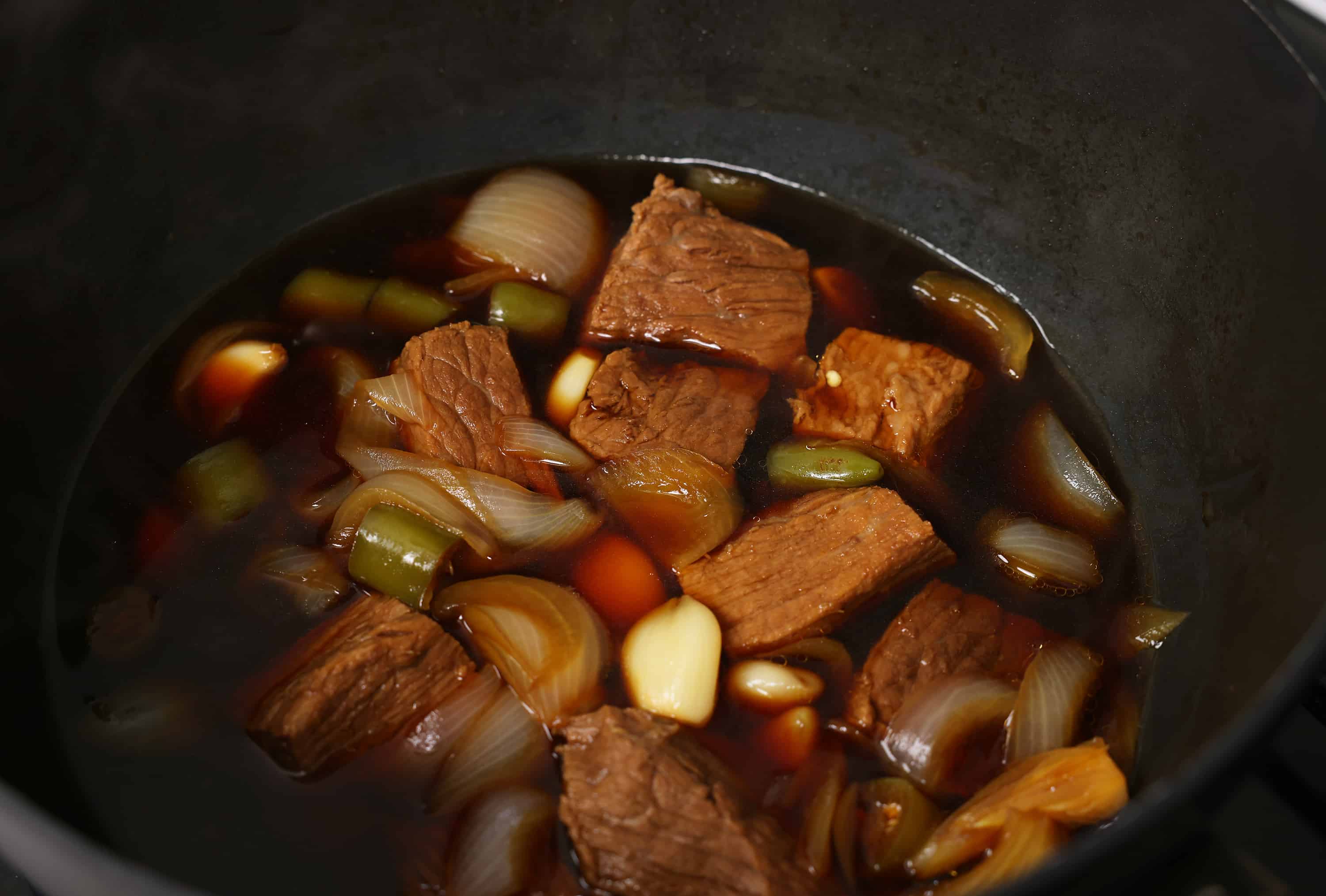
- Cover and cook for another 20 minutes over medium heat.
- Remove the pot from the heat and let it cool down until you can handle the beef with your hands.


Serve
- Take out the beef and tear it into thin strips. Put it into a serving bowl and add some garlic and green chili pepper, along with some of the braising liquid.
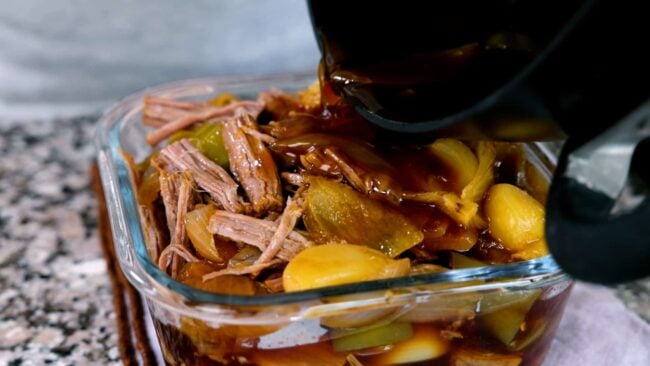
- Refrigerate the leftovers in an airtight container for up to 1 week.
Buy this recipe's ingredients online
I really like Weee! they deliver quality packaged and fresh Korean ingredients to the continental USA. Cheaper and better than Amazon! Check them out!




So glad to find this! I got some from one of our local Korean places the other night and loved it so wanted to try making it. Just wondering, would this be something you could make in a crockpot/slow cooker?
Yes, you can make it with a slow cooker or a pressure cooker. Cook the meat until it becomes tender but not too soft.
Thank you. I am not sure how to go about adjusting the instructions for a slow cooker, would you be able to help me please?
When using a slow cooker, the liquid doesn’t reduce as much, so try using a little less water than the recipe calls for.
Would I still have to do the first boil on the stove or could that be skipped with the slowcooker?
안녕하세요! I was wondering how much more soy sauce I should add to keep it in the fridge for 2 weeks and even 4 weeks? Thank you!
I would recommend doubling the soy sauce amount (so 1 cup). This does make it more salty but it lasts longer (several weeks, my grandma’s one would last maybe up to 1-2 months) and still tastes great with some rice and a bit of butter (butter mixed in the rice, not the soy)! I think it will coagulate more (since you’re leaving in fridge for longer) but don’t worry, just scoop the amount you want out and heat up to melt :)
Can you tell me why use a wooden spoon to stir?
The wooden spoon happened to be next to me! : ) You can use any large spoon to stir it.
Thank you for sharing a good article about delicious food and overall your blog is great full of good content. thanks a lot.
My husband is vegetarian, could I use tofu or something else instead of the beef?
Are you familiar with deodeok (Codonopsis lanceolata)?
You have to soak it in cold water to remove the bitterness, but the texture is just right.
Check out my vegan tofu pickle recipe (dubu-jangajji in Korean) here! https://www.maangchi.com/recipe/dubu-jangajji
Please please tell me what is the head of garlic seasoned with in the picture of your lunch table? It looks AMAZINGand I ❤️❤️❤️ Garlic!!! Also what is in the bowl at the very top? I can’t get enough banchan!!
Well – as Maangchi said in her video: It’s not the right season for pickled young garlic yet – the state when the stems are still green and juicy and the membranes are still soft and edible. She’ll publish her recipe and video then.
Here’s the recipe I use in the season (all dry parts removed) – but you may make something similar with peeled, perfect, squeaky fresh garlic to pass the time:
Put the garlic in a fitting container, cover it with diluted vinegar (about 1 cup 5% vinegar and water for 1 quart of garlic) and let stand (covered) for one week. The color will change to turquoise, that’s absolutely normal. The acid will kill unwanted bacteria.
Pour off the vinegar (you may use it for other purposes).
Mix enough soy sauce with sugar (6 parts soy sauce, one part sugar) to make sure the garlic will be covered (about 4 cups – 2/3 cup for the amount mentioned above).
Boil the soy sauce with the sugar for 10 minutes. Remove the froth. Let it cool. Pour the mixture over the garlic.
Let stand for at least three weeks. That’s the hardest part. ;-)
No need to refrigerate; it will keep forever. Until there is no more. ;-)