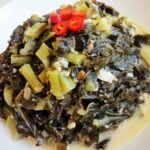
Collard greens are not a familiar vegetable in Korean cuisine. However, since the vegetable is nutritious, healthy, and delicious, I wanted to use it in my cooking. First I tried to make kimchi with it, but it turned out too tough. Then I tried cooked collard greens at a BBQ restaurant in New York and […]
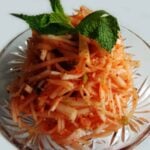
Musaeng-chae is one of the easiest and most common Korean side dishes. A good quality Korean radish is firm, and the taste is juicy, sweet, and crunchy! Choosing a good radish is very important to make good musaeng-chae. How can you know if it’s firm and juicy? The outer skin should look smooth and shiny, […]
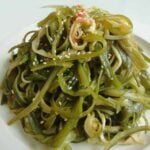
Edible sea vegetable or (“sea plant”) miyeok (미역) is a very healthy food that contains high levels of calcium, iodine, vitamins, and other minerals. It is called “wakame” in Japanese, “qundaicai” in Chinese, and “fougère des mer” in French. In Korean cuisine, it’s usually used for soup or salads. Julgi (줄기) is “stem” in Korean, […]
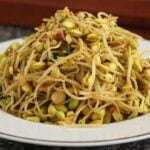
Kongnamul-muchim is one of the most common Korean side dishes, and it’s included in almost every meal. It’s very popular among Koreans, and they never seem to get tired of it. It’s very economical and also good for you. The soybean sprouts used in this video were grown at home, but you can also buy […]
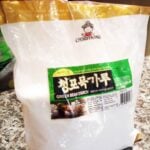
Sometimes incorrectly labeled as mung bean flour (probably because mung beans look like green beans when they’re in the pod), this is a finegrained starch extracted from mung beans. It is used to make noodles and side dishes. With one small package, you can make a huge amount of jelly. Use what you need, then […]
Hi, everybody, I’m going to introduce another side dish recipe to you. Cheongpomuk-muchim is made with mung bean starch. It’s sugar-free and fat-free but delicious. What’s the taste like? Hmmm, if you like noodles, you’ll like it. As you see in the video tutorial, I add 1 teaspoon of salt for 7 cups water and the starch powder, […]
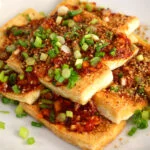
This pan-fried tofu with seasoning sauce is a favorite among Koreans. Simple to make and delicious, you won’t believe how good tofu can taste, with just a few ingredients!
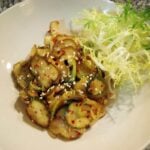
I’m introducing Korean style salty cucumber pickles (oijangajji). Unlike Western cucumber pickles, oijangajji is seasoned with a lot of other condiments and spices, which makes it good for side dishes. After we make the pickles I’ll show you how to make two side dishes that use oijangajji. When you choose cucumbers, make sure they are […]
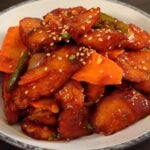
Every Korean lunchbox (dosirak) can use a bit of these spicy stir-fried fish cakes. Spicy, chewy, salty and spicy, kids love them but so do parents. What’s not to love?
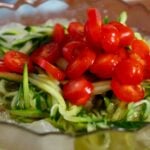
Are you looking for something refreshing, light, healthy, and cold cold cold? This is it! These cool cucumber matchsticks in an icy, garlicky, sweet, sour, and salty brine are just the thing.
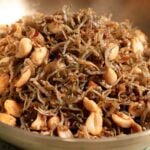
Who wouldn’t like something sweet, crunchy, & nutty?! Today’s recipe, myeolchi-ttangkong-bokkeum is exactly that: stir-fried dried anchovies and peanuts. It tastes like a sweet, salty, crunchy snack. This is one of the most common and popular side dishes for Korean lunch boxes (dosirak), and almost every family has its own recipe for it. Sometimes chopped green […]