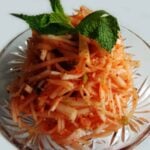
Musaeng-chae is one of the easiest and most common Korean side dishes. A good quality Korean radish is firm, and the taste is juicy, sweet, and crunchy! Choosing a good radish is very important to make good musaeng-chae. How can you know if it’s firm and juicy? The outer skin should look smooth and shiny, […]
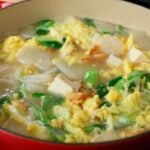
If you make this soup early in the morning for your husband or wife (^^) who are suffering from a severe hangover, you will get a lot of credit from him or her.
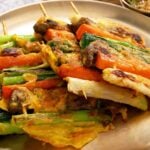
In this recipe we skewer green onion, beef, and carrot, make them into pancakes and then cook them in a skillet. This is my late father’s favorite dish, so everytime I make and eat it, I think of him.
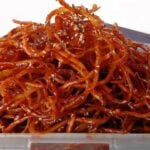
Ojingeochae muchim is one of the most popular side dishes for Korean lunchboxes (“doshirak“). I learned this recipe from my cousin Kyeong in Korea, who was attending university when I was in high school. I couldn’t believe how tasty it was when I tasted her ojingeochae muchim because it was much softer than my own […]
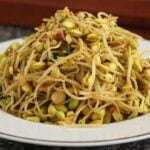
Kongnamul-muchim is one of the most common Korean side dishes, and it’s included in almost every meal. It’s very popular among Koreans, and they never seem to get tired of it. It’s very economical and also good for you. The soybean sprouts used in this video were grown at home, but you can also buy […]
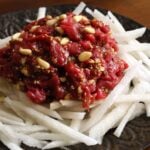
Korean seasoned raw beef (yukhoe) is a delicious, fantastic totally unique dish: cool, garlicky, nutty, a little sweet and of course meaty! It makes for a great side dish for drinking. My recipe uses a lot of garlic, so plan in advance for garlic breath! This recipe has been a favorite in my family for […]
This yeast converts sugar or starch into alcohol and carbon dioxide, so it will make your dough rise or give your brewing a boost! The yeast is alive but inactive because it’s dried out. Once water is added, it starts to work. Buy in any grocery or baking supply store, and store in a cool, […]
This chicken and chicken soup called Yeonggye-baeksuk in Korean (영계백숙) is a simple, communal dish that’s delicious, filling, and easy to share with many people. It uses a young chicken between 3 and 4 pounds which is boiled and then served with a rice porridge made from the broth. I remember my grandmother on my […]
Warm, creamy, nutty, and healthy, this is the perfect stew for colder weather. Just thinking about a bubbling pot of my grandmother’s kongbiji-jjigae makes me comfortable lol. In this recipe, I make it like she made it. Enjoy!
Hi, everybody, My trip to Boston was very fun. I was happy and excited to have a part in a movie! It wasn’t difficult for me to act. It was thrilling to be surrounded by smart, passionate filmmakers. Even though it was cold, they worked so hard. The lighting person had to hold up the […]
I sometimes think Maangchi is not me but kind of 3rd person! So I’m calling myself “Maangchi in …” As I mentioned before, I have been interviewed by Korean radio broadcasting companies and newspaper reporters. Some readers told me that I was on the Korean news on Monday night. Here’s the clip from KBS (Korean […]